On 12 June 2026, the Belgian Council of Ministers approved a draft law proposed by Minister Vanessa Matz aimed at regulating the use of anti‑drone jamming technology. The proposal addresses a fundamental gap in current legislation: while drone detection capabilities have advanced rapidly, the legal ability to intervene remains tightly restricted.

Traditionally, the use of signal‑jamming devices, which disrupt the communication between a drone and its operator, has been strictly prohibited under telecommunications law.
Until now, only police and defence (including NATO and SHAPE) were allowed to use such tools under exceptional circumstances. The new proposal changes that.
What Will Change?
1. Expanded Access to C‑UAS Mitigation Capabilities
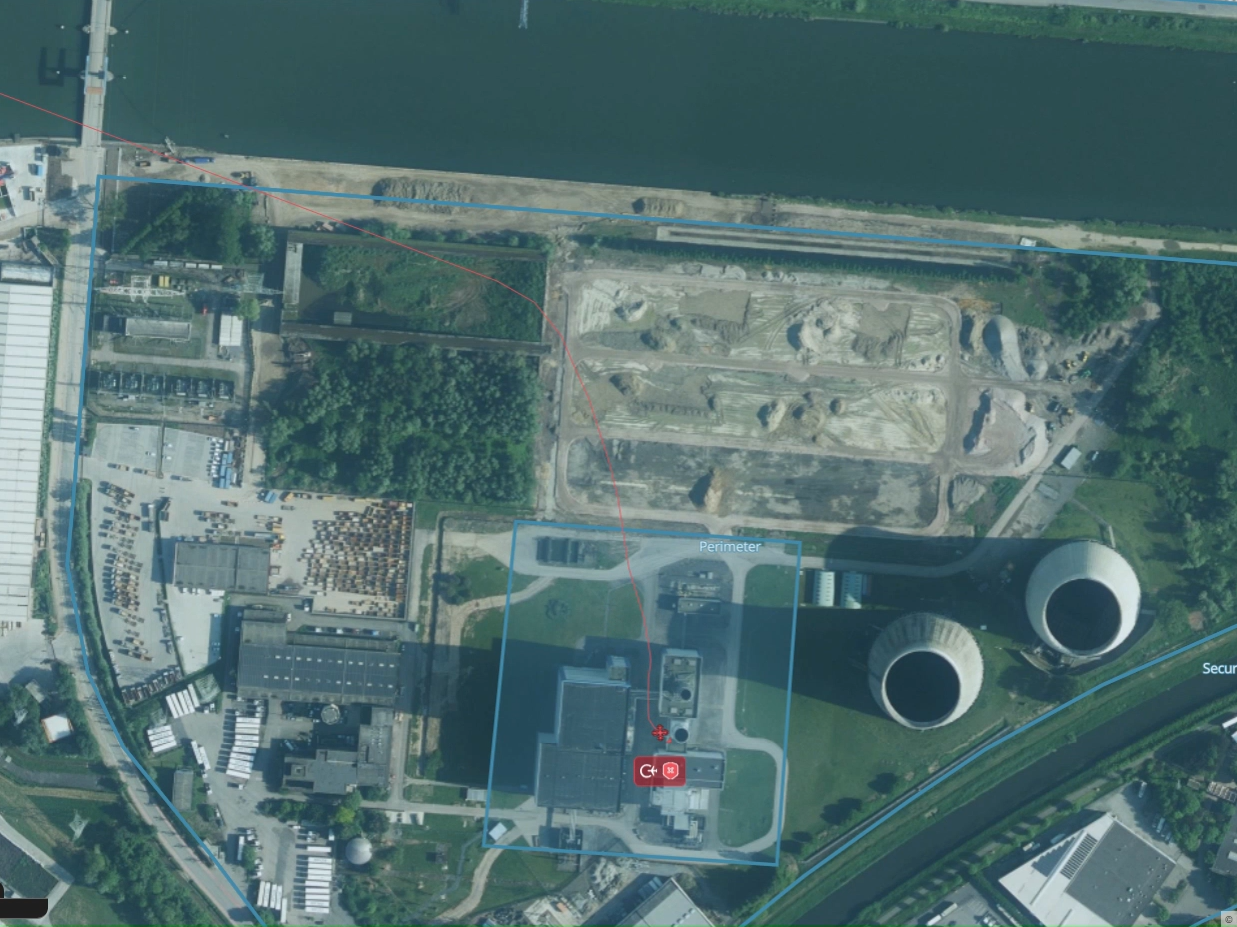
The most significant shift is the extension of jamming rights beyond state security actors. Under the proposed law, operators of critical infrastructure would also be allowed to deploy anti‑drone technologies. This includes:
- Nuclear facilities
- Prisons
- Seveso sites (industrial sites handling hazardous substances)
- EU institutions and other sensitive locations
This is a major policy evolution: for the first time, non‑government operators responsible for critical infrastructure may gain the legal right to actively neutralise drone threats.
2. Strict Governance and Safeguards
The Belgian government is clearly aware of the risks associated with jamming technologies. The proposal therefore introduces a strict regulatory framework, including:
- Mandatory authorisation from the Belgian telecom regulator (BIPT)
- A case‑by‑case risk assessment before each use
- A mandatory reporting obligation within two hours of deployment
These safeguards are essential, because jammers can disrupt not only drones but also emergency communication systems, medical equipment and aviation navigation services. The goal is to strike a balance between security needs, and the integrity of critical communications infrastructure.
What This Means for Critical Infrastructure Protection
Perhaps the most important takeaway is the fact that drone threats are now officially recognised as a critical infrastructure risk. This aligns directly with broader regulatory trends such as NIS2 and CER (Critical Entities Resilience Directive).
In that context, this proposal strengthens the toolbox available to infrastructure operators and reinforces the expectation that they must actively manage drone risks.
Read here why drone detection is essential to comply with CER.
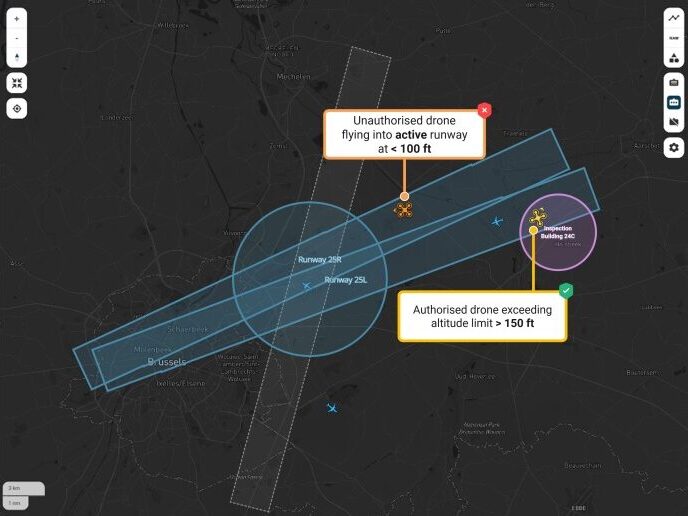
SkeyDrone helps airports, seaports, and critical infrastructure operators take full control of their airspace, while supporting safe, legitimate drone operations at the same time. In seconds, we turn raw sensor data into clear threat assessments. By combining drone detection, flight authorisation, and situational awareness in one platform suited for dual use, we show what is flying, what is approved, and what needs action. The result: fewer false alarms, fewer unnecessary shutdowns, and safe, uninterrupted operations where they matter.
This article was originally published by SkeyDrone.