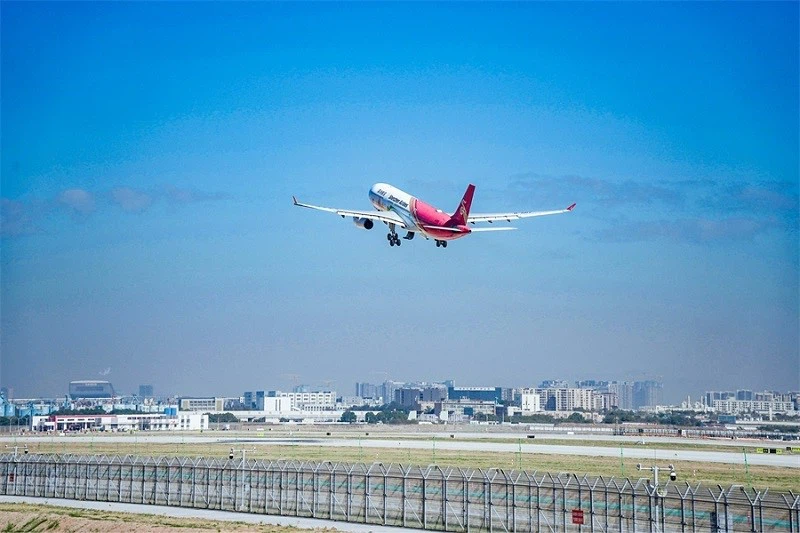
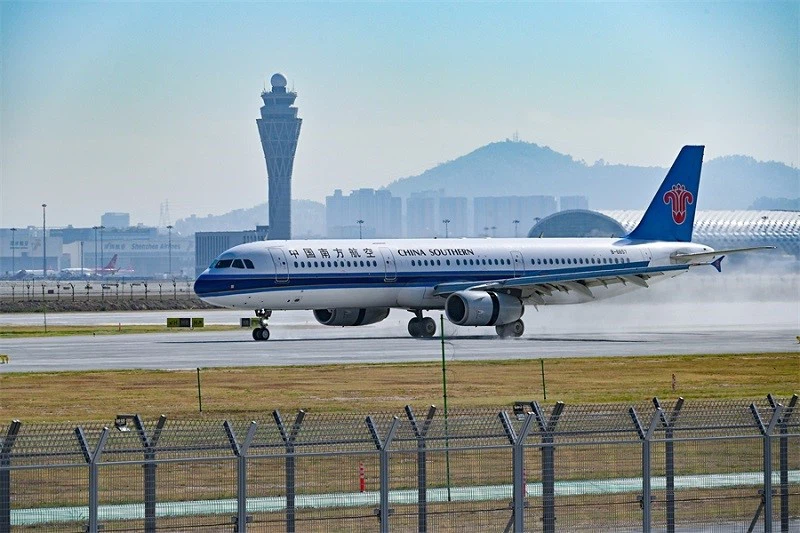
On 29 November, Shenzhen Airport officially opened its third runway. At 10.08 am, Shenzhen Airlines flight ZH9103 became the first to take off from the new runway, followed by China Southern Airlines flight CZ3590, which landed at 10.13 am.
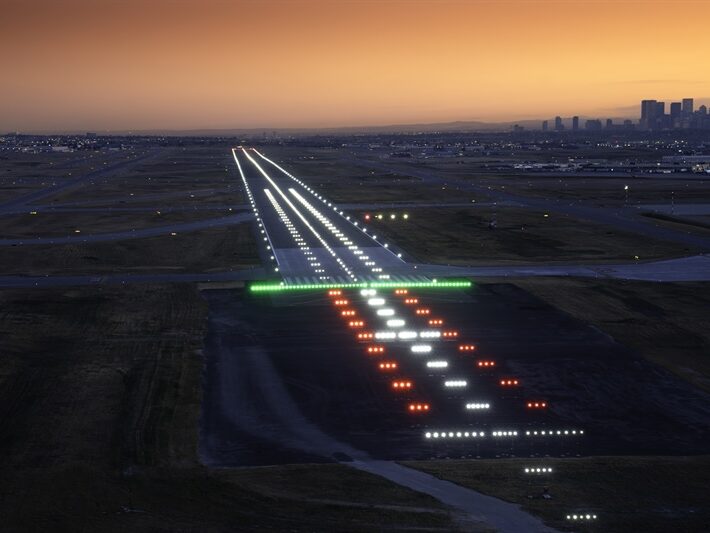
The third runway is 3,600 metres long and 45 metres wide. It has a 4F flight zone rating, which is the highest standard for accommodating large passenger aircraft. Its commissioning significantly increases the airport’s hub capacity, operational efficiency, and development potential, supporting its role as a regional gateway international aviation hub and strengthening the Guangdong–Hong Kong–Macao Greater Bay Area airport cluster.
Construction of the runway incorporated smart construction methods and innovative technologies, including intelligent paving, prefabricated cable wells, and a fully digitalised quality control system. These measures allowed the main runway to be fully connected in just 98 days and ensured that flight calibration, industry acceptance, and final inspections were completed ahead of schedule.
Shenzhen Airport’s three runways are equipped with advanced navigation systems, high-precision lighting, and safety enhancements such as FOD detection and runway status lights. They meet international standards and are designed to maintain high safety and operational efficiency under diverse weather conditions.
The airport’s three-runway operation will allow flexible deployment of eight different operating modes, optimising take-offs and landings, reducing congestion, and supporting more passenger and cargo routes. In 2024, Shenzhen Airport handled over 60 million passengers, and in 2025, passenger throughput is expected to exceed 65 million, with cargo and mail volumes surpassing 2 million tonnes.
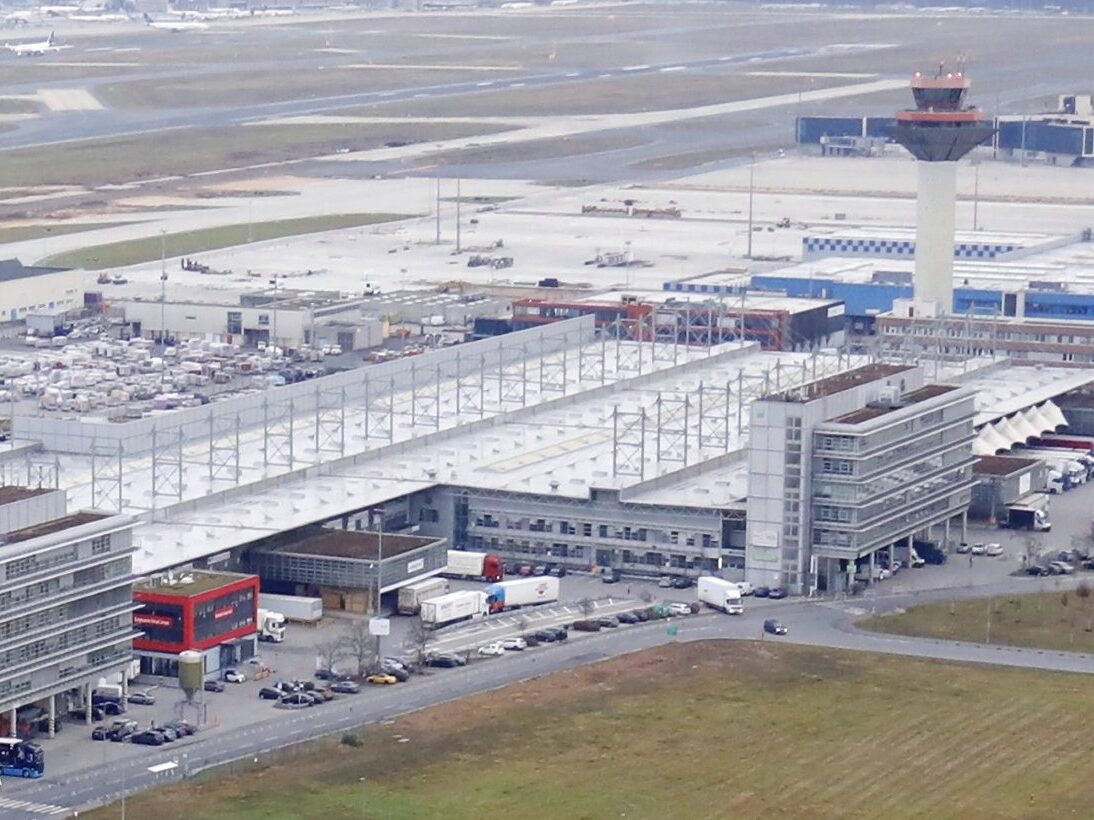
Construction is also underway on a new terminal area, north cargo area, and supporting facilities, forming a ‘3+3+3+1’ infrastructure structure: three terminal areas, three cargo areas, three runways, and one satellite terminal. Once complete, the airport will be capable of handling 80 million passengers and 4.5 million tonnes of cargo annually, further supporting regional air logistics, trade, tourism, and high-end manufacturing.