Ask a ground handler what keeps them up at night, and the answer used to be operational: delays, weather, staffing. Increasingly, it’s something else — a licence renewal date circled on a calendar, and the growing suspicion that renewal is no longer a formality.
In Spain, ground handling licences were re-tendered across 44 airports in a single exercise; the reshuffling of who held rights there was significant enough to unsettle assumptions across the industry. Brussels went through a comparable upheaval. Amsterdam is being watched closely for signs of how it may follow. None of this reads as an anomaly anymore — it’s a pattern that operators are learning to incorporate into their business.
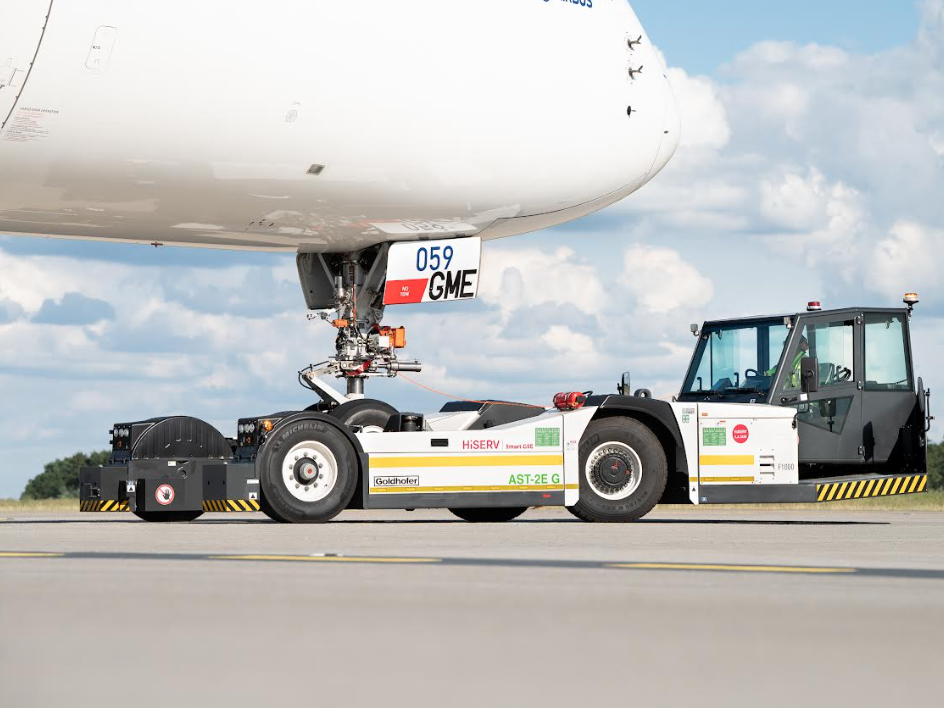
What is harder to plan for is the effect this pattern has on a balance sheet. Equipment bought to serve what looked like a ten-year contract stays in the books even when that contract turns into a five-year gamble, or changes hands entirely. The tow tractors and belt loaders are still there, still depreciating, long after the certainty that justified buying them has gone. Ground handlers are left carrying fleets sized for a market that no longer behaves the way it did when the purchase order was signed.
This isn’t only a two-party problem between operators and airports. Airlines are the market’s third, quieter decision-maker — whether they self-handle, and whether they expect a contractor to turn up with owned equipment or rented flexibility, shapes demand as much as any airport’s licensing decision. All three are converging, from different directions, on the same question: does this asset need to sit on anyone’s balance sheet at all?
What Makes A Pooling Arrangement Work
The industry’s latest response has a name: pooling. Shared equipment, better utilisation, less clutter on a congested apron: the pitch is easy to make and, on paper, hard to argue with. The harder question is why so many pooling arrangements quietly fail to live up to it.
Wolfgang Fasching, Head of Commercials at HiSERV, said:Pooling only works if it is built on trust. That means the right pool size for the partners involved, fair usage, and invoicing which everyone can actually verify — not just good intentions.
He has spent close to 30 years moving between the airport and ground handling sides of the business.
In practice, pooling collapses for a small number of predictable reasons: a pool sized wrong for its participants — too large to be economical or too small, forcing pooling partners to compete over the same units; invoicing built on terms one party trusts and another merely tolerates; and, most often, no reliable answer to a deceptively simple question: Who used this piece of equipment, and when?
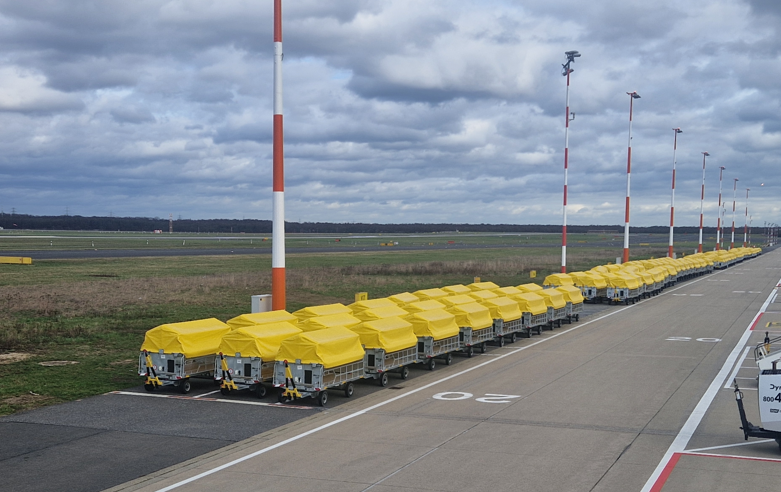
That last point tends to decide whether a pool survives its first year. HiSERV’s live pooling arrangement with Düsseldorf Airport — now covering more than 850 units of non-motorised equipment, with motorised assets planned to follow — has shown this in practice, not just on paper. Usage has to be visible to every partner, not asserted by one and taken on faith by the rest. That requires the right technology to sit quietly underneath the arrangement. Tracking is not designed to police the participants, but to remove the ambiguity that erodes trust before anyone notices it happening. Get that layer wrong, and no amount of goodwill saves the pool. Get it right, and the economics largely take care of themselves.
The pattern is not confined to one airport. At Amsterdam Schiphol, pooling has been credited with substantially cutting the number of GSE units in circulation — evidence that, done properly, the model reduces genuine surplus rather than simply reshuffling who owns it. HiSERV is preparing to extend its own model to Berlin Brandenburg next, building on the same essential trust.
The Broader Shift Ahead
It would be a mistake to treat pooling as a cost-saving footnote rather than a structural shift. So far, pooling has mostly covered non-motorised equipment — such as dollies and carts. The open question is whether the same logic extends to equipment operators still insist on owning outright, such as tow tractors, belt loaders, and de-icing vehicles. Some of that resistance is generational. Ground handling’s newest entrants have grown up inside sharing economies of every kind and carry none of the instinct that ownership must precede use.
For HiSERV, that shift is not a threat to the business model — it is a test of it. If pooling is meant to deliver flexibility, that flexibility has to show up in practice, not just in the pitch. It can only be proven in a working pool: real usage data, and partners willing to put their name next to the result.
This article was originally published by HiSERV.