AI With Purpose, Not Just Promise
Artificial intelligence (AI) is frequently described as one of the most significant disruptors of our era.
It’s easy to get swept up in the hype, like many of us did with mobile tech and the early days of the web.
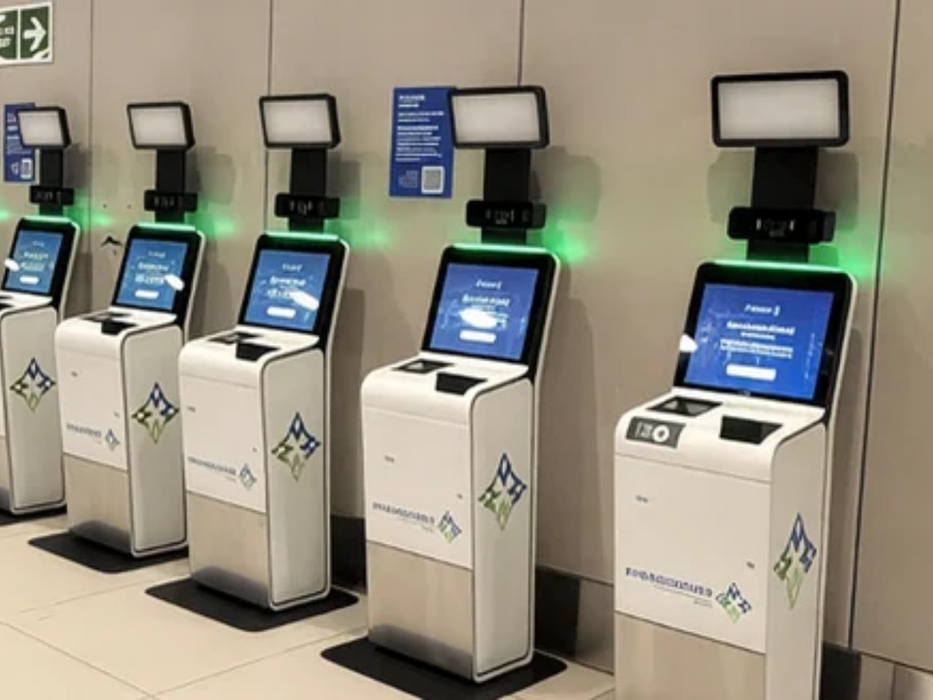
Nowhere is AI’s potential more evident than in aviation, which is entering a pivotal decade – where data and autonomy will transform the entire travel experience. From smarter baggage handling to biometric boarding, AI is already reshaping passenger movement through airports and streamlining how operations are managed behind the scenes. The potential is vast – for smoother journeys, faster turnarounds, and more sustainable operations.
And at the heart of this shift is the invisible infrastructure powering a new era of travel technology.
But the real opportunities lie not just in adopting shiny new technology for its own sake but in applying it with purpose. In an industry like ours, defined by tight margins and strict regulation, success depends on focusing AI on clear business outcomes. It can’t be just about the hype. Within SITA Technology & Engineering, it’s not about what AI can do in theory, it’s about what it can deliver in practice.
Take baggage management. AI-driven platforms are already helping reduce baggage mishandling and recovery times that have been improving for years. These aren’t abstract ideas; they’re tangible improvements that save airlines money and passenger frustration.
That’s the kind of impact we should always be aiming for. Where AI earns its place as a solution when it solves real problems based on real metrics.

Driven by People, Powered by AI
The aviation ecosystem is a highly complex business. Aircraft, airports, passengers, and service providers all generate massive amounts of data. Making sense of it takes more than traditional analytics. It calls for intelligent systems – new classes of AI built into software platforms and products – capable of uncovering patterns, anticipating needs, and responding in real time.
We’re starting to see a glimpse of what’s possible with agentic AI – autonomous systems composed of specialized agents that can operate independently. Think of multiple AI agents coordinating baggage transfers, gate assignments, and passenger flows in real time to minimize delays and improve the overall passenger experience. That’s not futuristic, it’s achievable.
Generative AI and Augmented AI are also starting to demonstrate potential, while Agentic chatbots capable of natural conversation, making decisions, initiating actions and pursuing goals autonomously, could handle routine queries, freeing employees to focus on high-touch, human interactions. But the real promise lies in operational planning – with generative models that can simulate scenarios, anticipate disruptions, and propose solutions before problems escalate.
And while there’s a lot of noise about AI replacing jobs, the reality is that AI can’t run the show on its own. A human-centric approach is essential. That means embedding AI into tools and systems, using it to automate tasks, and accelerate development – always with skilled ‘conductors of AI’ firmly in the driver’s seat
Legacy Data, New Possibilities
If aviation has one truly untapped resource, it’s legacy data. Decades of operations have left a goldmine of information – on passenger flows, aircraft performance, baggage movements, and more, and continue to do so. The challenge is that much of it is stuck in unconnected silos, locked in outmoded systems.
It’s here that AI can mine that data, connect the dots, and uncover insights that were previously inaccessible. Agent-to-agent (A2A) ecosystems, networks of AI systems that share data and context with each other, will become increasingly important, enabling them to collaborate and reach more informed decisions. We might finally break down the silos to gain new insights.
Imagine understanding not just where passengers spent their time in an airport, but how that links to retail sales, security wait times, and flight punctuality. The efficiency gains could be huge.
Discernment remains essential. Data insights without adequate governance risk becoming more a burden than benefit. Aviation deals with some of the most sensitive information imaginable, from passenger identities to travel histories and biometric data. Unlocking any legacy system must be done with strong privacy, transparency, and compliance safeguards. Because while technology evolves quickly, trust takes time, and that’s something we can’t afford to lose. New technology is fleeting, but trust is forever’.
Think Bold, Test Fast, Learn Always
The driver of AI innovation is human curiosity. The best ideas often come from people asking, “What if?”, not from top-down mandates.
That spirit of curiosity is exactly where our engineers thrive. Within Technology & Engineering (T&E), bold ideas move swiftly from concept to deployment, and innovation becomes operational reality, with advanced engineering delivering lasting value to both customers and colleagues. Our teams – spanning engineering, analytics, operations, sales, and product – are already exploring next-gen platforms and adaptive AI models.
For anyone wondering how to get started with AI, my advice is simple – focus on the problem you’re trying to solve. Pilot projects are a great way to learn. And if something doesn’t work, that’s okay, knowing when to pull the plug is as important as knowing when to double down. Stop one and start another.
At T&E, we embrace a ‘try fast, fail fast, learn fast’ mindset. It’s not about risk for risk’s sake, it’s about disciplined curiosity – testing, measuring, and scaling what works.
Intelligence by Design
Any industry with critical infrastructure can’t afford mistakes, and within aviation the stakes are very high. That’s why a measured approach to AI adoption is essential – one that balances innovation with responsibility. Training is key. Everyone, from engineers to sales teams, should have a basic understanding of AI. While some will deep dive, we all need to grasp the basics, so we speak the same language.
This democratization of knowledge ensures AI isn’t confined to specialists – it becomes embedded in how we work, woven into the fabric of our business.
Outcomes Over Algorithms
AI is a revolution, with unlimited potential. When guided by clear objectives, robust governance, and human curiosity – is to help businesses rethink what’s possible.
AI might represent an inspirational new technology and opportunity, but like every breakthrough before it, what truly matters is how it is applied.
Its real value comes from defining the outcomes we want and then using AI to help us get there. That starts by remembering that the value chain begins with business objectives, empowered with algorithms or technology, and ends with truly innovative customer outcomes.
So, while AI is the enabler, it’s our vision that will determine the scale and significance of its impact.
This article was originally published by SITA.