What it takes for biometric systems to work in real airport operations.
Over the last few years, the conversation around biometrics in aviation has shifted from experimentation to operational expectation, as airports and airlines have gathered measurable evidence of the benefits it can bring. Facial recognition can typically lead to a 20-50% improvement in passenger processing efficiency, according to an IATA report, which enables the reallocation of 10-15% of checkpoint staffing from manual document checks to high-value security and passenger service activities.
But while the benefits have been proven, the reality is that operational results so far have ranged from excellent to deeply inconsistent.
Challenges include slowdowns due to rescans or mismatches, inconsistent accuracy across demographics, interoperability gaps and scalability limitations. This highlights the industry’s need for not just biometrics, but biometrics that work reliably in real-life operations.
Key Factors that Impact Performance
Underperformance in airport biometric deployments rarely stems from a single issue. Based on HID’s experience, several key factors impact performance:
Environmental conditions are a consistent challenge. Facial recognition systems are highly sensitive to lighting quality, and inconsistent lighting across airport terminals negatively affect image capture and matching.
Demographic performance gaps persist across some algorithms, which have historically shown higher error rates with certain demographic groups. When systems haven’t been trained on sufficiently diverse datasets, these disparities become particularly problematic for an environment focused on international travel.
How passengers interact with capture equipment can also cause challenges. For example, they may approach from different angles or stand at varying distances, while hats or glasses can obstruct facial features if the system isn’t designed to handle them.
User adoption is often the deciding factor in operational success. Biometric systems that are difficult for passengers to use or burdensome for staff to manage slow throughput and undermine trust. Intuitive design, clear guidance and simple workflows are therefore critical to achieving consistent performance at scale and driving rapid adoption.
The Three Pillars of Effective Airport Biometrics
The question facing decision-makers today is no longer whether to deploy facial recognition, but rather how to evaluate whether a solution will actually perform in a live aviation environment.
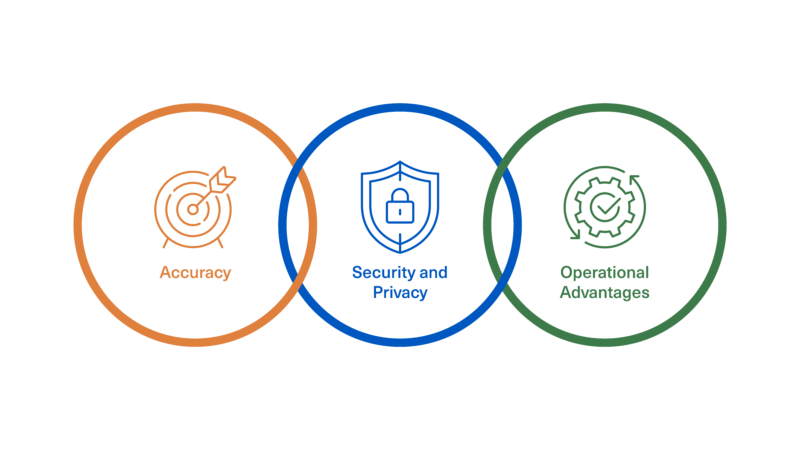
HID has found that high-performing biometric deployments consistently succeed across three interconnected pillars: accuracy, security and privacy, and operational advantages.
Three Pillars of High-Performing Biometric Deployment
Pillar 1: Accuracy
Accuracy is the foundation on which everything rests. A biometric system that struggles to consistently verify passengers – regardless of their age, appearance or the surrounding environment – creates friction at exactly the moments airports can least afford it.
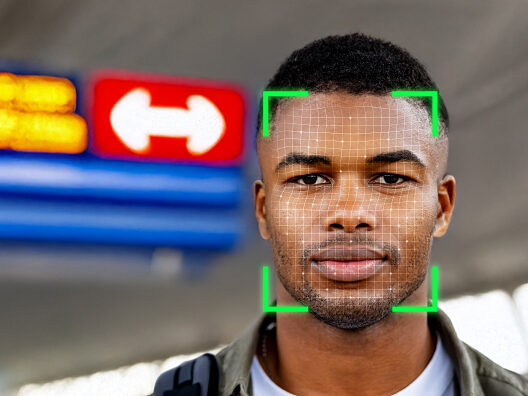
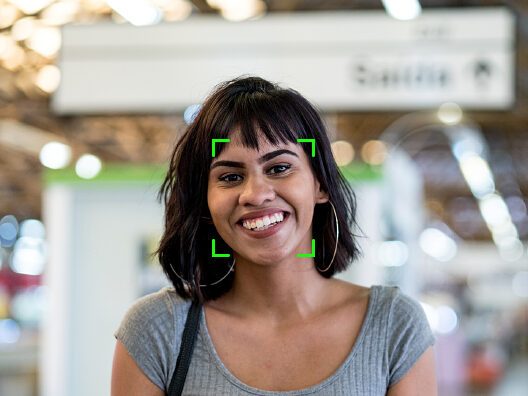
This affects dwell times, rescan rates and the equity of the passenger experience, therefore systems should be evaluated on real-world performance data across diverse populations. This includes performance validation using ethically sourced datasets and testing methodologies that reflect diverse demographics across age, ethnicity and skin tones.
Environmental resilience and passenger variability present equally distinct challenges. Airport environments are notoriously challenging and can degrade image capture quality in systems not engineered to handle them. Equally, a system’s field of view and its ability to capture a usable image without requiring passengers to stop, reposition or rescan can dramatically impact throughput.
Results such as a 30% reduction in boarding processing time and 5x faster verification speeds are only achievable when accuracy is consistent at volume, across all passenger types, throughout an entire operating day.
Pillar 2: Security and Privacy
Accuracy may determine whether a biometric system works, but security and privacy determine whether passengers and regulators will trust it.
In aviation, the threat landscape is evolving. Spoofing attempts have grown increasingly sophisticated, from high-quality printed photographs to realistic 3D masks and deepfake video replays. Therefore, a system incapable of distinguishing a live face from a fabricated one isn’t fit for purpose.
Privacy expectations from both passengers and regulators are also intensifying. Regulations are placing greater scrutiny on how biometric data is collected, processed and retained. High opt-out rates are often a signal that passengers don’t trust how their data is being handled, directly undermining the efficiency gains biometrics can deliver.
The most secure architecture offers security and privacy by design. Systems that minimise biometric data exposure – whether through secure on-device processing or encrypted transmission and processing – reduce both regulatory complexity and breach risk substantially.
Pillar 3: Operational Advantages
A biometric system that’s accurate and secure still has to work within the reality of airport operations. That means integrating with existing infrastructure, scaling across terminals and delivering measurable efficiency benefits.
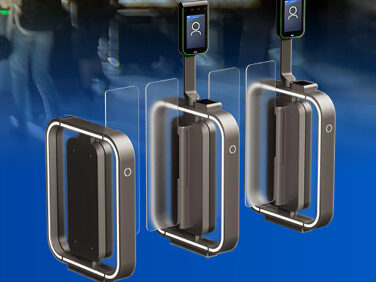
Integration is where many deployments encounter unexpected issues. Systems that depend on proprietary hardware, custom middleware or heavy cloud connectivity can struggle when introduced into complex, legacy airport technology stacks. By contrast, biometric systems designed to integrate across multiple form factors, such as kiosks and eGates, offer far greater long-term flexibility.
Airports that begin with a single checkpoint need confidence that the same solution can expand across terminals and facilities without infrastructure replacement. The total cost of ownership looks very different for a system built on an open, interoperable architecture versus one that creates vendor dependency at every stage of growth.
Staff adoption and passenger guidance also matter more than they’re typically given credit for, as intuitive interfaces, clear passenger instructions and well-trained staff reduce rescans, minimise fallback incidents and protect the throughput gains that justify the investment.
Asking the Right Questions
Based on HID’s experience, airports and airlines that achieve the best biometric outcomes tend to ask more specific, operationally grounded questions during procurement, and treat vague or overly optimistic answers as a warning sign.
On accuracy, these include:
- How does the system perform under challenging lighting conditions?
- What field of view is required for consistent capture?
- What real-world throughput can it sustain at peak volume?
On security and privacy:
- How is biometric data processed, transmitted and protected throughout the system?
- What data, if any, is retained, and by whom?
- What level of liveness detection has the system been independently certified to?
On operational advantages:
- How does the biometric system integrate with existing airport infrastructure?
- What is the fallback process for passengers who cannot or choose not to participate?
- How intuitive is the system for both staff and passengers, and what level of training or guidance is required?
- What does the scaling pathway look like beyond the initial checkpoint?
The answers to these questions reveal far more than a technical specification sheet, indicating whether a vendor truly understands the aviation environment, or has simply adapted a general-purpose system to fit it.
👉 Explore what high-performing biometric identity looks like in real airport environments
👉 Engage with industry experts on getting facial recognition right at scale