By Alastair MacLeod, Chief Executive Officer, Ground Control
The UK government has set a clear objective to achieve routine BVLOS drone operations by 2027. It is now official policy, outlined in the Department for Transport’s Future of Flight action plan as one of five strategic outcomes for the sector. The Civil Aviation Authority’s published roadmap, CAP3182, lays out the operational requirements for that commitment. We are less than a year away from a watershed moment that will reshape how drones contribute to the UK economy and public services.
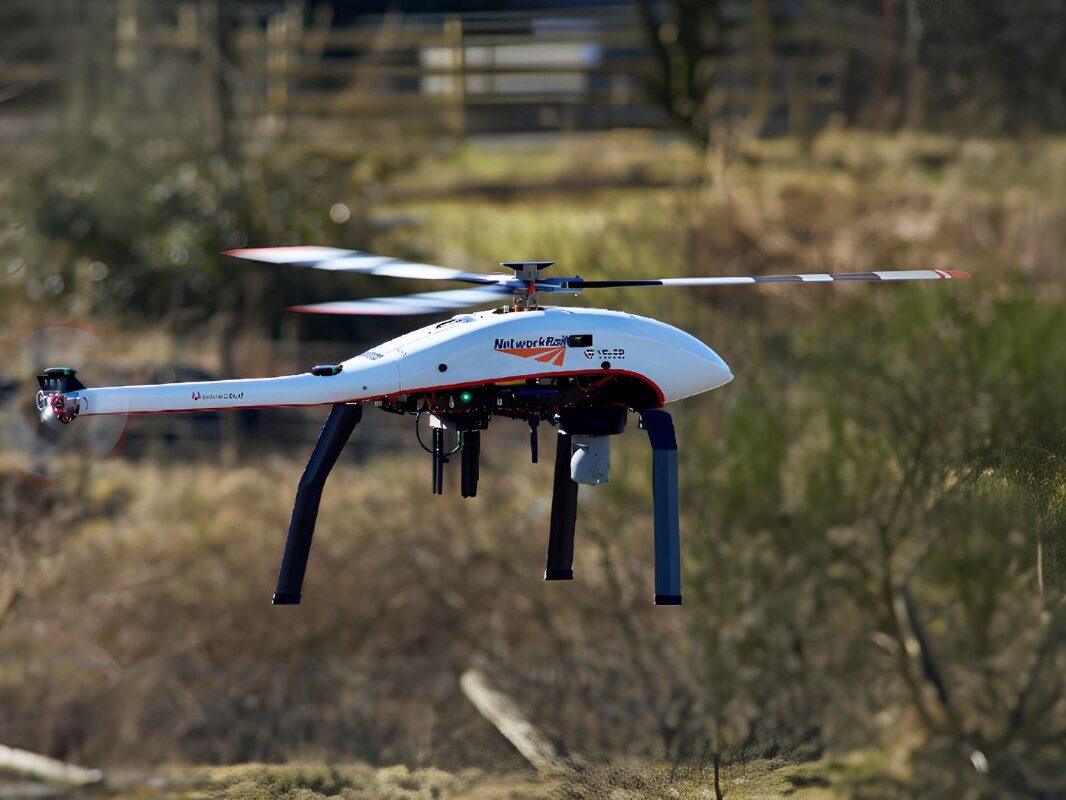
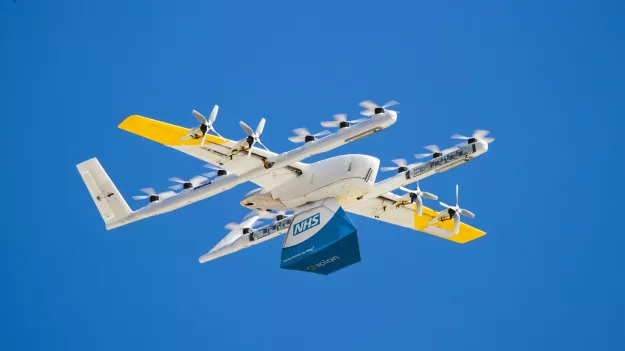
On the surface, the transition seems feasible. Drones have been flying beyond pilots’ sight lines for years in trials and controlled environments. NHS trials on the Isle of Wight have shown that chemotherapy drugs can be transported by drone up to eight times faster than by traditional transport. Offshore wind farms are being inspected in real time, while infrastructure teams are using drones to monitor thousands of kilometres of remote pipelines.
But there is a critical gap between isolated trials and routine, scalable operations, and this gap grows more urgent by the month. Trials are time limited, individually authorised, each an exception. Routine operations mean dozens, eventually hundreds, of drones sharing UK airspace every single day, along with standardised procedures, predictable costs, and regulatory confidence in safety. They require something the drone industry has not yet fully deployed at scale, which is, resilient connectivity that can maintain command and control across the full operational route.
The terrestrial network ceiling
LTE and 5G networks provide excellent coverage across many populated areas and transport corridors. But for long range BVLOS operations across rural, remote or offshore environments, continuous terrestrial coverage cannot always be assumed.
And these are exactly the use cases that regulators and government bodies have prioritised for the 2027 milestone. NHS deliveries will not be confined to city centres, and infrastructure inspection and emergency response will often take place in the most remote and challenging terrain. A framework for routine BVLOS operations therefore has to account for missions that extend well beyond reliable terrestrial coverage.
There is a second and equally important issue of resilience. BVLOS safety cases increasingly depend on operators demonstrating that command and control can be maintained if a primary communications path degrades or fails. That makes independent communications paths valuable, and satellite provides one that does not depend on local terrestrial infrastructure.
Satellite as the critical enabler
Satellite connectivity can help address both problems simultaneously. It extends communications beyond terrestrial coverage and provides an independent path that does not rely on local network infrastructure.
The difference between early BVLOS trials and routine operations lies in what regulators and operators demand from the connectivity layer. Trials can be designed around known coverage, tightly controlled routes, additional supervision and specific operational mitigations. Routine operations need communications architectures that can be repeated reliably and scaled across many missions.
A hybrid connectivity approach is emerging as one practical model. Operators can use LTE for high bandwidth payload data when coverage is available, while satellite provides a separate path for critical command and control. Properly engineered systems can prioritise and switch between available links as conditions change, reducing the burden on the remote pilot.
This is where low-latency satellite IP connectivity can support real-time command and control. In Iridium-led BVLOS flight testing, L-band satellite connectivity delivered latency measured in hundreds of milliseconds, with command responses in less than 700 milliseconds.
The economics also change as BVLOS operations scale. Connectivity becomes part of the core operating architecture rather than an exceptional safety measure, and its cost can be weighed against the value of greater route flexibility, wider coverage and reduced dependence on terrestrial infrastructure. Just as importantly, repeatable communications architectures can support a move away from bespoke, flight-by-flight operating models.
The 2027 test
The 2027 deadline presents a test for the entire drone industry, but especially for connectivity providers. A regulatory roadmap is only one part of the transition. Real progress lies in fielding systems that regulators can assess, that operators can trust, and that provide the coverage, resilience and predictability routine BVLOS operations demand.
Multiple trials and operational deployments already demonstrate that this model can work. Drone delivery operators are moving beyond early stage proof of concept into repeated, commercial operations. These are not flights that happen once or twice. They are flights that happen daily, across varied terrain, in mixed weather, relying on satellite as either primary or redundant command and control link. They work because the engineering is sound and because satellite connectivity addresses coverage and resilience gaps that terrestrial networks alone cannot always overcome.
The 2027 ambition is ultimately a test of whether BVLOS can move from individually managed trials into repeatable engineering practice. Connectivity will be central to that transition. Routine operations cannot assume that any single network will always be available, which makes resilient, multi-link architectures increasingly important.
Routine drone delivery, pipeline inspection and emergency response across the UK’s most challenging terrain are no longer distant concepts. The technology is already being demonstrated in real-world operations. The next step is to build the resilient communications architectures, including independent satellite links, that allow those operations to scale safely and routinely.