Airports of every size are absorbing growth inside footprints they can’t easily or quickly extend. Moving bag acceptance off-airport reduces the demands baggage places on the check-in hall.
By Ultan O’Brian, Chief Revenue Officer at Airportr
Self-service check-in and automated bag drop have changed the departure process considerably, but one assumption remains unchanged: airports expect passengers and their luggage to arrive at the terminal together.
That assumption informs everything from the space allocated to check-in halls to staffing models and peak-hour plans. For airports accommodating growth within an existing footprint, separating passenger arrivals from their baggage is another way to use existing capacity.
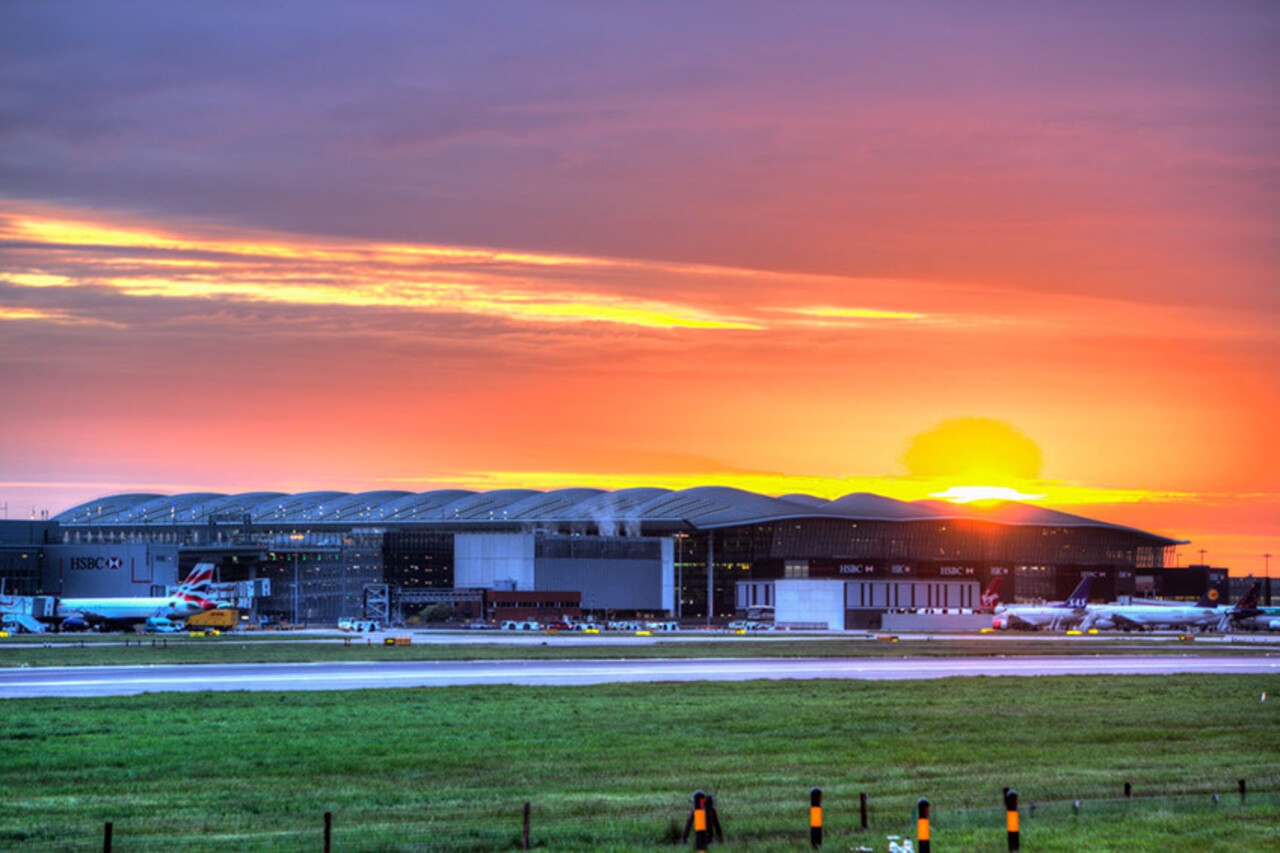
In 2025, Heathrow handled a record 84.5 million passengers on around 480,000 flights (a 0.7% rise on the previous year) and its chief executive describes the airport as operating at capacity. That kind of growth has a significant consequence for the terminal.
When traffic climbs without a matching rise in infrastructure, extra passengers and their bags arrive through the same doors, at the same hours, into halls built for last decade’s volume. Genève Aéroport reached 133 passengers per scheduled movement in 2025, up from 124 before the pandemic, on 1% fewer flights than the year before. Today’s aircraft are fuller, but the kerbs remain the same width as they’ve always been.
The departure areas are fuller, too. Check-in halls are sized for the most stressful two hours of the week and stand underutilised for the rest of the time. Every terminal planner accepts that deal, because desks, kiosks, and queue lanes must absorb a peak that arrives on a schedule nobody controls. The “cost” shows in both the capital tied up in landside floor area that doesn’t actively generate revenue and the congestion that spills into the security area at peak periods.
Adding more floor area is the conventional answer, and it comes with the timescales the industry knows well. Heathrow has £1.3 billion of capital planned for 2026, part of which goes to a new baggage system for Terminal 2, while the third runway, which would lift its ceiling toward 150 million passengers, remains years from opening. Geneva’s CAP2030 terminal project promises similar capacity expansion but currently sits in legal appeal. Both airports need the space. But neither airport will have it in time for the 2026 holiday rush, or even for next year’s summer peak.
Shifting the Baggage Burden Away From the Terminal
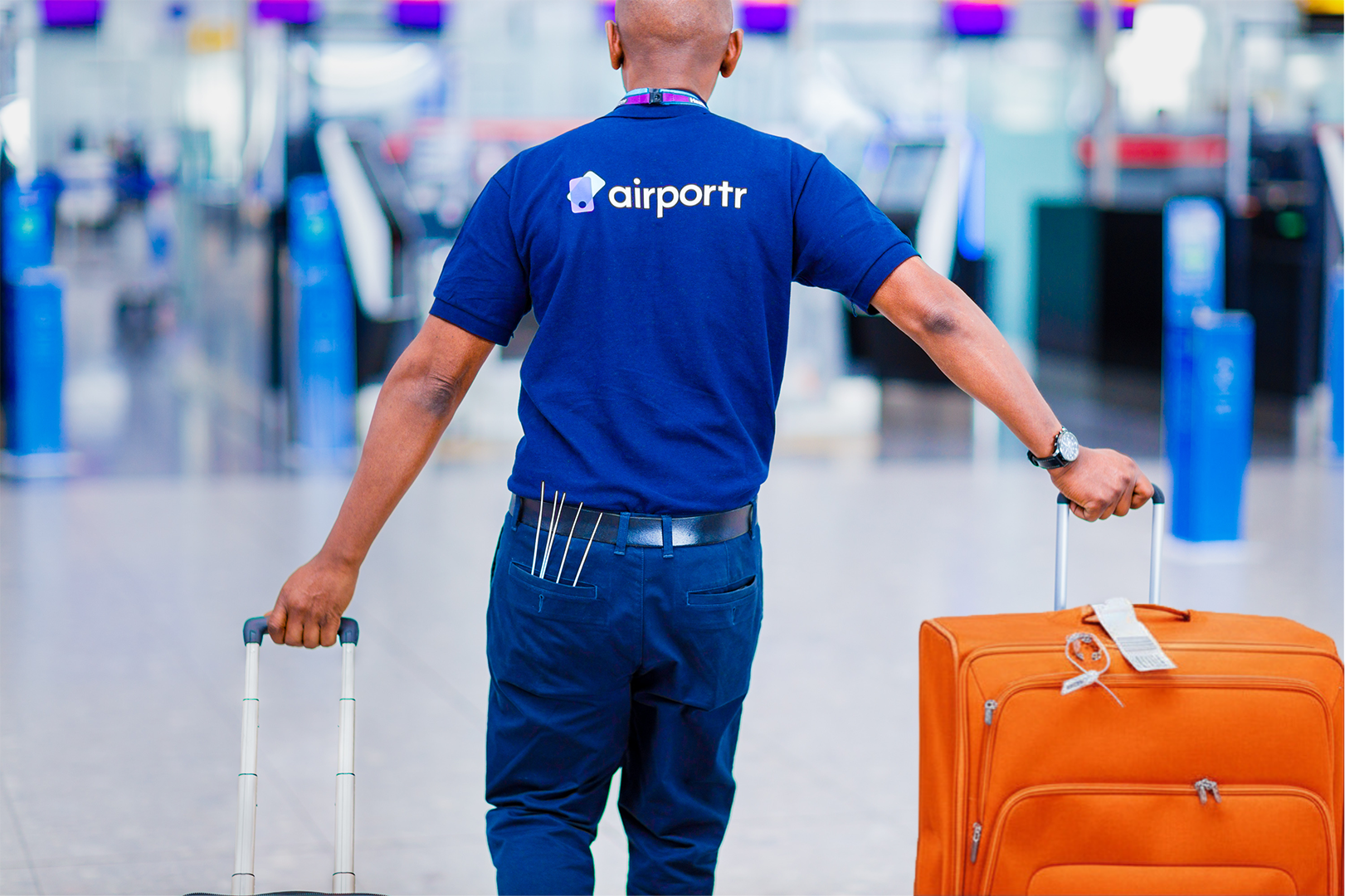
Airports can adopt a measure to better manage volume growth while infrastructure improvements gradually arrive. What we describe as Baggage-as-a-Service moves part of passenger processing entirely out of the terminal. A vetted driver collects the bag from a home, office, or hotel; the bag is checked in before the passenger leaves for the airport and travels directly to the passenger’s flight under seal, with tracking they can follow. In most of our deployments, the bag enters the airport’s baggage system without ever entering the departure hall.
Christian Schmitt, Condor’s COO, put the logic plainly when the airline launched with us at Frankfurt in May: travel should begin well before passengers reach the airport, and services like this let a carrier rethink the passenger’s entire journey from the first step.
The passenger benefits are obvious in the convenience and peace of mind the service provides. The structural benefit is what interests airport operators most. Each bag collected from a passenger’s front door is one less kerbside handover, one less trolley, one less desk transaction and one less bag-drop interaction during the busiest part of the morning. Airports accommodating more passengers within an unchanged footprint need ways to reduce passengers’ demand on the terminal building, not add further strain on it.
How a Bag-Free Airport Experience Affects Traveller Behaviour
Passengers who arrive without baggage move through the terminal on a different timeline and pace. They clear security sooner because they skip a queue, and reach airside with more of their pre-flight time intact. What they do with that time also changes. Airport commercial teams understand the value of that time better than anyone. Genève Aéroport took CHF 98.1 million in commercial revenue in 2025 from shops, restaurants and advertising, and reports the figure is directly correlated with traffic. At Heathrow, over the Christmas holiday period, World Duty Free sold an item every 5.5 seconds.
The satisfaction data runs the same way. Airportr handles over a million bags a year and 92% of users report an improved travel experience. According to SITA, nearly ⅓ of travellers rank end-to-end baggage handling as one of the most valuable smart travel services, and 66% would pay for faster, more convenient airport processing.
In other words, demand for better baggage services is high; the only limit is deployment capacity.
How Airports Benefit from the Network Effect
Eleven new airline and airport deployments went live across Europe in 2026, taking the service into Frankfurt, Zurich, Geneva, Vienna, Heathrow and Edinburgh with Lufthansa Group carriers, Condor, Singapore Airlines and easyJet. The pattern behind that number matters more than the number itself. When Singapore Airlines extended the service into Frankfurt and Zurich, it didn’t build anything in Germany or Switzerland. The courier network, airport relationships, and operating procedures were already established there for other carriers, so the airline inherited a fully operational and working station.
Condor is scaling the same way, launching in Frankfurt with plans to follow in Gatwick, Vienna, and Zurich, all airports where our logistics presence already exists. Star Alliance membership adds another layer, since a passenger can fly one leg with a participating partner and continue with Singapore Airlines without breaking the hands-free arrangement.
That accumulated groundwork is what separates a pilot from a proposition. The technology, the vetted logistics network, and the induction procedures arrive proven, and the work reduces to integration with local operations. Each deployment makes the next one cheaper and faster, so the network’s value compounds for the airports and airlines inside it.
Airports have two ways to create capacity. One is a traditional capital programme, which delivers on a decade timeline and belongs in every masterplan. The other is creating efficiencies on the day of travel that reduce queues, encourage better passenger flow-through and alleviate the stress on critical operational systems. Off-airport baggage checks check all these boxes and deserve to be as much a priority for airports as their long-term infrastructure plans.
Ultan O’Brien is Chief Revenue Officer at Airportr, where he leads commercial growth and partnerships with airlines and airports. He brings extensive experience across travel technology, SaaS and in-flight connectivity, including senior roles at Viasat and Boxever. At Airportr, he focuses on scaling Baggage-as-a-Service, creating new commercial opportunities and improving the passenger journey.