By Sumeet Puri, Chief Technology Solutions Officer at Solace
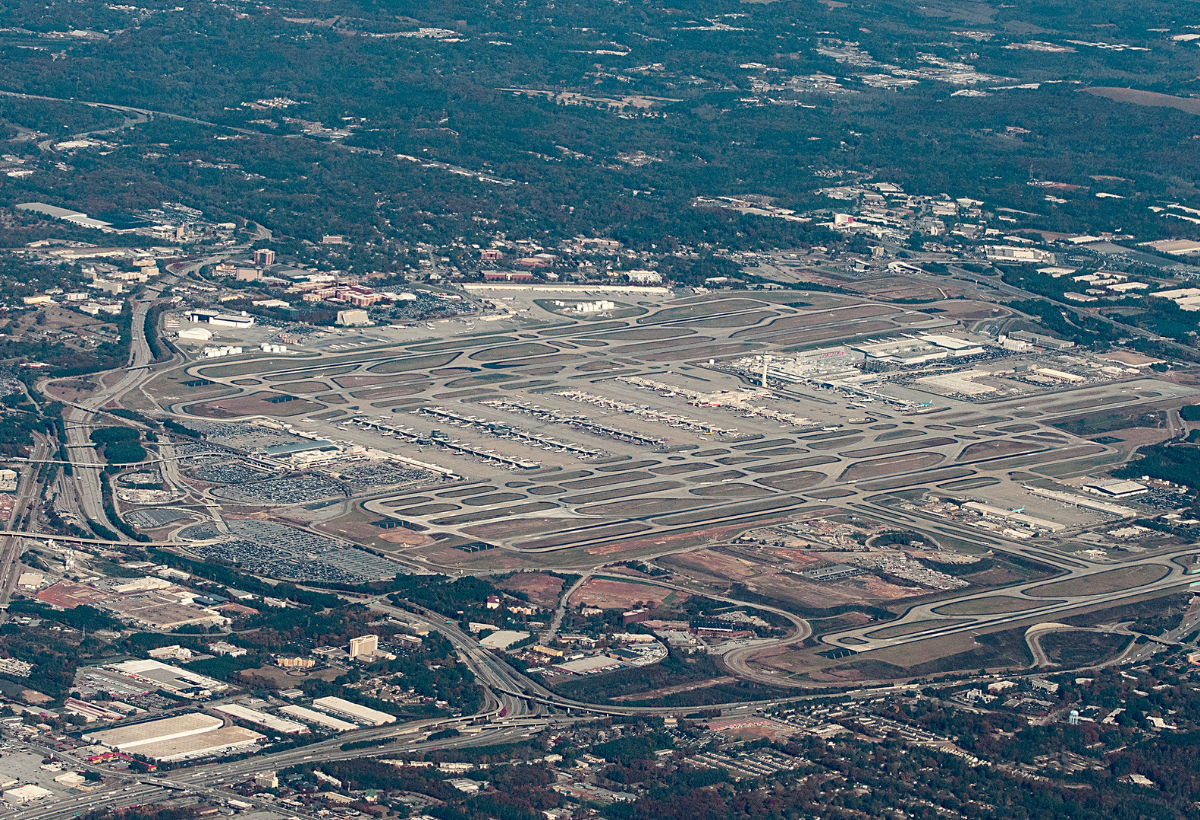
For decades, aviation operations have been engineered primarily around physical infrastructure – runways, gates, counters, and checkpoints – designed to move aircraft and passengers safely from curb to cabin. Today, that paradigm is being tested with increased traffic, complexity, and Advanced Air Mobility (AAM).
The Pacific Asia Travel Association (PATA) projects Asia Pacific (APAC) will welcome 714.9 million international arrivals in 2026, rising to 789.2 million by 2028 — growth that depends on airports, airlines, and Air Navigation Service Providers (ANSPs) staying in sync, in real-time, for every single passenger journey. To facilitate this, the International Civil Aviation Organization (ICAO) has established global provisions for System-Wide Information Management (SWIM), the global standard for real-time data exchange across the aviation ecosystem, accelerating APAC’s shift from periodic reporting to continuous information sharing.
But that shift can’t wait for the future. Turnaround, baggage, and disruption data are being asked to move as events happen, not on a batch cycle, just as APAC adds millions of passengers a year to systems still built for the old cadence. A clear imperative drives the industry’s next chapter: operational data must reach every system and partner that depends on it within seconds, without friction. Legacy infrastructure, built for a previous era of travel, simply cannot keep pace.
When Systems Stall Instead of Signal
Much of the industry has invested heavily in digital transformation – automation, IoT, and increasingly AI – generating more data than ever before, but this also reveals a deeper architectural challenge. Too many aviation systems still function as a chain of periodic updates, operating like a “distributed monolith”. Systems appear modular on paper, but in practice, they remain tightly coupled. When a single link lags in a terminal, an operations control centre, or a crew-scheduling system, downstream processes stall.
The consequence is familiar to any airport, an airline, or an ANSP. Teams over-provision for the worst case, building in buffer time, extra staff, and manual checks to compensate for systems that simply can’t keep pace with the speed of a passenger’s day.
The passenger experience makes the stakes all the more concrete. Picture a gate status already updated to “Boarding,” while the main departure display working off old data still reads On Time.” The passenger sees no reason to hurry, browses the shops a little longer, and arrives just as the gate closes. This single lag cascades into real delays, inconvenience, and costly operational recovery.
Building the Real-Time Foundation for Takeoff
Enter real-time aviation operations, powered by event-driven architecture that moves data quickly, reliably, and securely across hybrid, multi-cloud, and IoT environments.
This real-time foundation relies on three pillars:
- First, liberating siloed data from legacy architecture by letting systems send updates automatically as things happen. An event mesh makes this possible, connecting every system, application, and partner so data flows the instant it changes.
- Second, stream data processing, which distributes that information in real-time, so every application, system, and partner receives precisely the data and context it needs.
- Third, democratised access, which makes the same data available, under clear governance, across teams and the industry, eliminating the need for manual, single-party data relays.
By adopting this real-time foundation, aviation organisations across APAC are already unlocking valuable use cases:
- Intelligent Operations: An international airport authority ranked first globally for air cargo volume replaced a decade-old architecture with a real-time, event-driven platform. Flight, baggage, cargo, and operational data now synchronise across more than 400 systems within seconds, and operational issues are identified and escalated within 10 minutes through centralised monitoring. The same backbone now also carries environmental data, including a stormwater monitoring system tracking water levels across the airport during severe weather.
- Seamless Passenger Flow: A major airport in Asia connecting more than 400 cities, over 100 airlines, and millions of passengers annually faced growing complexity managing its data, systems, and services. As such, the airport implemented a real-time data platform powered by event-driven video streaming, enabling live analytics for aircraft turnaround, baggage handling, and passenger flow – reducing delays, sharpening coordination, and speeding up decision-making and incident response.
Airports, airlines, and ANSPs are increasingly classified as critical infrastructure and are expected to maintain operational continuity during disruptions. These capabilities do not replace a Security Information and Event Management (SIEM), an identity and access platform, or a crisis management system. Rather, it is the integrated architecture that security and resilience systems depend on to know what is actually happening across the operation in real-time.
This same foundation is what continuous compliance runs on, enabling aviation organizations to meet evolving ICAO, IATA, and national regulatory standards while demonstrating compliance seamlessly as part of normal operations.
A national ANSP in Southeast Asia built its SWIM network on a real-time messaging layer processing 20,000 messages per second across flight plans, aeronautical information, and weather data. The architecture met government Internet/Intranet separation requirements, connected the organisation to regional partners over a secure aviation VPN, and became the shared event backbone across land, sea, and air transport agencies within the same government – underscoring how a real-time platform built for compliance can extend well beyond a single organisation’s walls.
Charting the Next Trajectory
Airports, airlines, and ANSPs are now beginning to connect this real-time layer to AI agents, digital twins, and predictive operations tools,using live event streams to anticipate turnaround risk, congestion, or a maintenance need before it affects a single passenger. None of that intelligence functions without a reliable, continuous flow of real-time events underneath it. If a predictive model is only fed hours-old data in batches, it’s only ever guessing at the situation, no matter where in the industry it’s being used.
The next era of aviation operations will be powered by Agentic Processing: AI agents that observe, reason, and act on real-time events, autonomously optimising turnaround times, managing disruptions, and predicting maintenance needs. The same real-time data foundation connecting systems today will power that agentic layer tomorrow.
The Runway is Now
APAC’s travel growth is well underway and not a planning scenario for some future year. Aviation organisations that treat real-time data architecture as foundational infrastructure, rather than as one system among many, will be the ones that absorb this growth without a corresponding rise in delay, disruption, and manual workarounds.
The airports, airlines, and ANSPs that get this right will not just be well-positioned for the next travel boom but also set the benchmark for how the rest of the aviation industry builds.