Airbus has announced a new flight-test campaign as part of its Wing of Tomorrow research programme, which will evaluate high-span wing designs for future single-aisle aircraft.
The three-year programme will see Airbus design, build and flight test full-scale wing extensions fitted to an A321neo. The trials are intended to assess how different wing geometries perform under real flight conditions and provide data to support the development of next-generation aircraft.
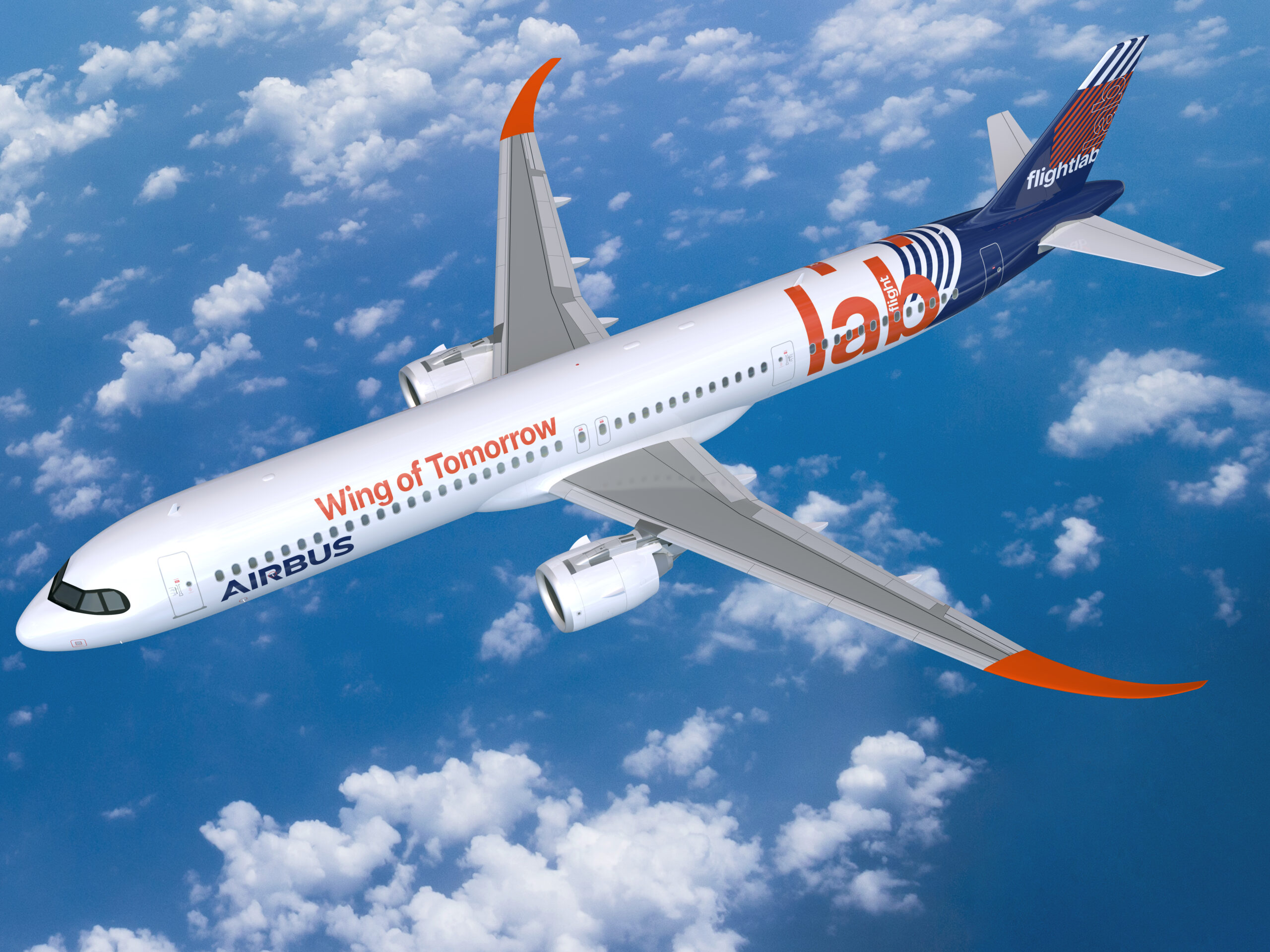
Each wing extension, measuring several metres in length, will replicate the fully extended position of a folding wing during flight. The structures will be equipped with testing instrumentation to monitor their behaviour and assess how an increased wingspan affects aircraft handling.
The wing extensions are currently being designed using digital modelling and wind tunnel testing before progressing to flight trials. Airbus said the resulting data will help reduce technical risk while evaluating the operational benefits of longer wings.
Sue Partridge, Head of the Wing of Tomorrow programme at Airbus, said:For more than 50 years, Airbus has spearheaded aviation innovation, continually pushing the boundaries of what’s possible to deliver more efficient aircraft for future generations. This is why the Wing of Tomorrow programme is such an exciting and rewarding journey to be on.
Importantly, the wing is one of the biggest levers we have to improve flight efficiency, which is why the Wing of Tomorrow is so critical for our next generation single aisle aircraft. This flight-test campaign will allow us to safely challenge traditional design limits and explore the benefits of longer wings.
The Wing of Tomorrow programme focuses on developing longer, lighter and more slender wings to improve aerodynamic performance and reduce fuel consumption. The flight-test wing extensions will be assembled at Airbus’ Wing Technology Development Centre in the UK before being transported to Toulouse for testing.
Airbus has already produced three 17-metre ground-based wing demonstrators through the programme, using them to investigate increased wingspan designs alongside more than 100 manufacturing and assembly technologies.
Since its launch in 2014, the programme has received 227 million GBP through the Aerospace Technology Institute (ATI) programme, a partnership involving the ATI, the UK Department for Business and Trade, and Innovate UK.
Alongside Wing of Tomorrow, Airbus is also progressing its Airbus UpNext eXtra Performance WING demonstrator, which is developing a wing capable of changing shape during flight to optimise aerodynamic performance. Assembly of the remotely piloted demonstrator is nearing completion in Cazaux, France, with its first flight planned before the end of 2026.
Both programmes are intended to support the development of wing technologies for Airbus’ future generation of single-aisle aircraft.