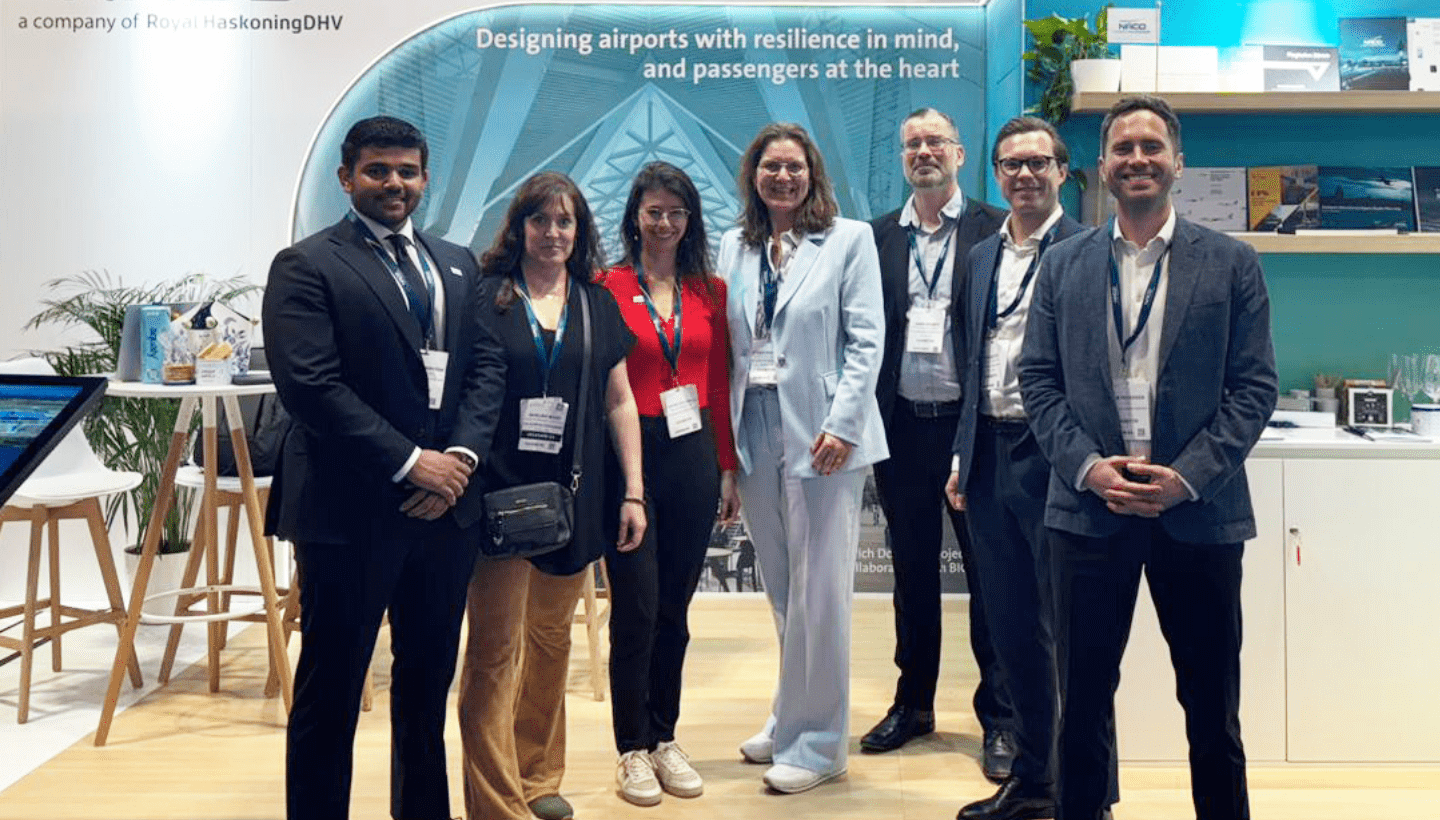
Transforming the airport experience requires an ecosystem-wide approach. Partnering with International Airport Review, Marije Teerling, Leading Professional Experience Management, and Adam Ekman Pedersen, Airport Commerce Lead at NACO hosted a webinar to explore how airports can move beyond silos to deliver better customer experience.

Joined by Eveline van Eijsden, Manager Marketing, Communications and CX at Rotterdam The Hague Airport, and Svetlana Simeonova, Director Commercial Activities & Customer Experience at Fraport Bulgaria, the webinar examined how collaboration, data and culture shape the passenger journey drawing on real life examples from leading airports.
Below we share some of the key insights from the discussion. These ideas provide the foundations for a more connected, efficient and customer centred airport ecosystem.
Why ecosystem thinking matters
Airports today are moving beyond siloed operations to embrace a new era of collaboration where ecosystem thinking enables them to adapt, personalise and continuously improve every touchpoint. This approach not only enhances the passenger journey but also contributes to operational resilience and boosts non aeronautical revenue.
Watch the webinar recording
The full webinar, Beyond silos: How ecosystem thinking elevates the airport experience, is available to watch below.
In this 60-minute session, our experts discuss the importance of collaboration, data sharing and design in creating a memorable passenger journey. The video provides rich context for the insights shared in this blog and showcases real examples from airports already benefiting from this approach.
What does good customer experience look like?
Good customer experience at an airport is the result of an effortless, predictable and emotionally positive journey. For airports, this means:
- Fast and efficient processing
- Clear wayfinding
- Good and relevant facilities
- Friendly, proactive staff
- A sense of place that reflects the airport’s identity
Passengers typically describe good experience more intuitively: Was it easy? Was it fast? Did it feel good?
As our panellists noted, passengers do not evaluate airports by department or operator. They experience the airport as a single entity. When processes run smoothly and staff demonstrate warmth and professionalism, the journey feels coherent and well-managed, regardless of who operates each touchpoint.
This is also why experiential interventions can have an outsized impact on how travellers remember their journey. A strong example provided by Fraport Bulgaria’s themed outdoor gate zones. The first of their kind in Europe, the outdoor gate zones at Burgas and Vana Airports increase capacity and ensure travellers leave the airport on a high note, with positive memories of their journey.
What impact have the themed open-air gates had on airlines?
Introduced primarily to address peak-season capacity issues, the open-air gates were deliberately designed to offer a distinctive and enjoyable passenger environment rather than functioning as simple overflow space.
While the gates were not conceived as airline-specific products, their popularity with passengers has naturally attracted attention from carriers. Airlines do not formally “book” these gates, but airport operations teams report growing interest from carriers who recognise the positive impact on the passenger experience. For leisure-focused airlines particularly, the relaxed outdoor setting, greenery, and beach-inspired design help extend the holiday feeling right up to boarding and align closely with their brand positioning.
The example illustrates how experience-led design can simultaneously support operational efficiency, non-aeronautical performance, and airline value, without requiring traditional terminal expansion.

Svetlana Simeonova Director Commercial Activities & Customer Experience at Fraport Bulgaria, said:Our gate garden project is a great example of ecosystem thinking, combining operational and commercial goals to deliver a space that delights passengers, improves efficiency, and brings the holiday mood right to the gate area.
How important is the ability to share operational data among stakeholders?
To support ecosystem collaboration, both airports highlighted the importance of integrated operational platforms. This level of data sharing helps to create a shared view on the passenger experience and insights into how partners in the ecosystem are dependent on each to create that memorable experience. Sharing a common view, preferably data-driven, is the basis to a more coordinated approach to the passenger’s journey through the airport and creating that seamless experience for passengers.
Fraport Bulgaria provides partners with access to relevant operational insights through its airport flight information system, enabling better planning and coordination.
Rotterdam The Hague Airport is developing a community platform open to all airport workers, regardless of employer. It will include operational alerts, passenger numbers, seasonal updates and required training.
Although these solutions are not formally labelled as Airport Operations Planning (AOP) systems, they fulfil similar purposes by enabling shared situational awareness and coordinated decision making across the ecosystem.

Eveline van Eijsden Manager Marketing, Communications and CX at Rotterdam The Hague Airport, said:We invest a lot in communications and collaboration with our partners and their employees. The interaction with all the airport workers makes them committed and enthusiastic in their work, and that’s the reason why our airport receives such a high Net Promoter Score.
How can airports measure the success of ecosystem thinking?
Ecosystem thinking improves passenger outcomes, operational performance and commercial results. Airports can measure its impact using a set of complementary indicators:
Passenger satisfaction
- Continuous surveys, including Net Promoter Score
- Social listening and sentiment analysis, for instance through Google reviews
- Mystery shopping, and expert terminal design or service quality assessment
Operational efficiency
- Queue and processing times
- On time performance
- Resource utilisation
- Staff engagement and training participation
Commercial performance
- Spend per passenger
- Dwell time and conversion rates
- Benchmarking against similar airports
- Measuring performance uplift from targeted CX initiatives
Fraport Bulgaria highlighted that even small improvements in satisfaction lead to measurable commercial gains. Rotterdam The Hague Airport is currently analysing the relationship between Net Promoter Score and spend per passenger to strengthen the evidence base for CX investments.
This article was originally published by NACO.