NACO’s work at Bandaranaike Airport began over 40 years ago with a master plan, building a lasting partnership. Engineers reflect on decades of development and progress.
Over 40 years ago NACO was approached to create a masterplan for Bandaranaike International Airport in Columbo. That project led to a lasting relationship that continues to thrive today. Engineers from projects past and present reflect on almost half a century of progress for Sri Lanka’s main airport.
A 40-Year Partnership Shaping Bandaranaike International Airport’s Growth
Henk de Lange, Former Project Manager at NACO, said:We started off with measuring tapes and typewriters and moved on to CAD and GPS.
Working for NACO for 42 years, Henk de Lange’s time at the company was bookended by projects at Sri Lanka’s primary airport. From his early work as a 20-something-year-old getting to grips with one of his first major professional assignments to a seasoned senior project manager of 60-something overseeing the runway’s first rehabilitation, Henk saw first-hand how technology and ways of working had moved on.
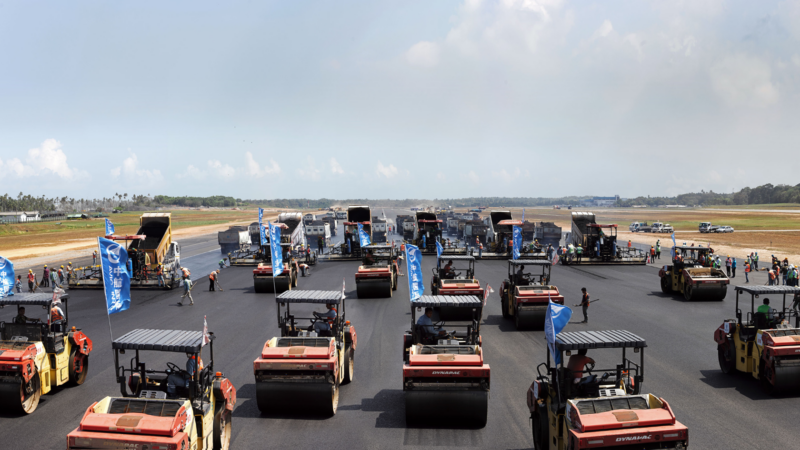
Henk de Lange, Former Project Manager at NACO, said:Back in the 80s we had 2.5 years to build a new runway, in 2017 we completed the surface rehabilitation within four months, whilst the airport remained partially open!
Senior Airport Specialist, Fer Mooren who worked on the 2017 rehabilitation task adds,
Fer Mooren, Senior Airport Specialist at NACO, said:Runway rehabilitation is something we've done all over the world, completing around 40 projects in the last 15 years. The technical side of the resurfacing project was therefore relatively straightforward, but keeping a single-runway airport running whilst the work is undertaken is where the challenge lies! The master planning and runway construction work we supported in the 80s was to create a new runway rather than having to keep it in use. It's a testament to the quality of work completed back then that it's lasted for 35 years. That does also mean that there was no one at the airport who was involved in the initial construction and there were no major refurbishment works in the meantime, so we had to work very closely with stakeholders to make sure we all understood the task and how the process would work.
Delivering Runway Rehabilitation in Live Airport Operations
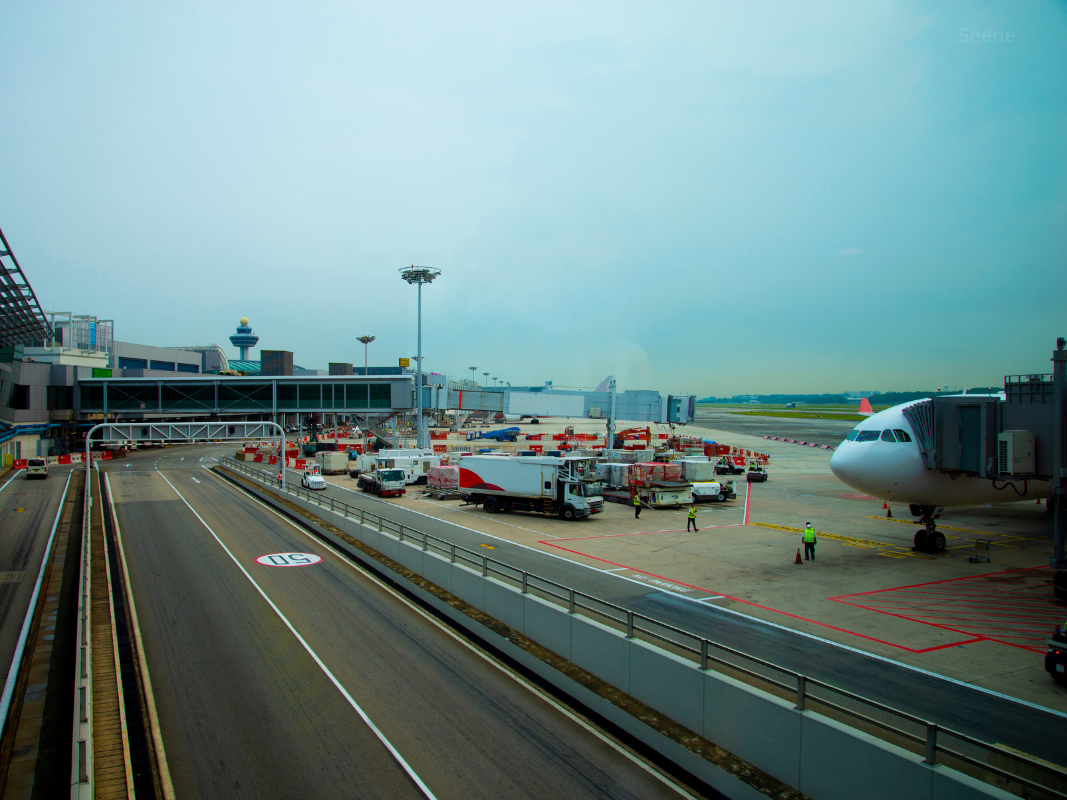
The runway rehabilitation project took place during daylight which was one advantage for the construction team. But with flights scheduled to land throughout the night it was imperative that work was completed and all safety checks carried out on schedule each day to ensure no further disruption.
Fer Mooren, Senior Airport Specialist at NACO, said:For a rehab project, we skim a layer off the top of the runway and replace it. Thanks to advances in material technology, we were using a new sort of material – common now but in 2017 it was new – stone mastic asphalt. Every shift you do a part of the runway and at the end of the shift the runway needs to be opened again. You must make sure that the asphalt has cooled down properly and that it is suitable for aircraft to move on again.
Henk de Lange, Former Project Manager at NACO, said:Working on an airport in live conditions means that safety and security is always number one. By late afternoon you would see hundreds of people doing the FOD walk along the runway, picking up loose stones or other materials which could be a danger to aircraft.
The monsoon season was another factor that the rehabilitation team had to consider.
Aasif Bapoo, Airside Systems Lead at NACO, said:When the seasonal rains arrive in Sri Lanka it can really come down! So the timetable we were working to wasn't just because the client wanted the project complete, we were literally taking on the elements. Any delay to the schedule could push the project further towards monsoon season and make getting the work finished even more challenging.
Fer Mooren, Senior Airport Specialist at NACO, said:In 2017, our role was chiefly design review and construction supervision. We were responsible for ensuring the design and construction met the safety standards which had increased markedly since the initial project. So, we were trying to work at pace whilst maintaining the very high safety standards required for runway work.
The new material introduced in the project was designed to withstand the added weight of new aircraft as well as the projected increase in traffic using the runway. It was also a significant development in helping improve drainage.
Fer Mooren, Senior Airport Specialist at NACO, said:Developments in material science are having a big impact on safety for runways, helping strengthen the surface and improve drainage. This reduces the risk of aquaplaning and helps airports manage heavier aircraft and more frequent flights. In countries like Sri Lanka where there is very significant rainfall – something that is being increased by climate change – ensuring that runways drain quickly is essential to maintaining safety and airport operations.
Upgrading Airside Infrastructure for Safety and Performance
Lighting was another common factor between the 1980s project and the more recent rehabilitation. The 2017 work saw 1000s of lights replaced as part of the runway renovation.
Aasif Bapoo, Airside Systems Lead at NACO, said:Naturally in 30-40 years lighting tech moves on. It might still work but clearly when the runway surface is being taken up it is an opportunity to update the lighting infrastructure too. The Bandaranaike runway was one of the first in SE Asia to get a full LED upgrade. We also installed a new substation, control system and other power infrastructure. With one project like this you can take a technological step forward of 40 years! I wasn't on the scene (or barely even born!) for NACO's initial work at Bandaranaike but I did enjoy being involved in the rehabilitation project. The speed that the construction teams worked at was amazing, but what was really impressive is that there was no compromise on safety. The project was delivered on time, to the required standards. We also made sure we enjoyed the journey, there was plenty of celebration along the way - ribbons, balloons, everyone there. That's why I remember this project so well eight years later, because it was so fun, I have fond memories of it.
Planning the Next 30 Years of Airport Development
And now, in 2026, almost 50 years since NACO first started working with the client AASL, the company is still involved in the next phase. Commissioned to work on a new masterplan which will help guide development at Bandaranaike airport over the next 30 years.
Christine Driessen, Assistant Director Strategic Advisory at NACO, said:It's fantastic to still be part of Bandaranaike airport's story. Having so much shared history and embedded experience in the country and with this client gives us a solid foundation from which to work from. We're currently supporting AASL as they define the vision for the airport, explore opportunities and work to meeting growth ambitions over the near and longer term. With the runway rehabilitation completed in 2017, this new masterplan is focusing on the surrounding infrastructure. Master planning isn't always about adding more assets, it's about making existing ones work harder. We're assessing how we help AASL optimise what the airport already has available. If growth means that they need new facilities – or even a new runway! – we can work with them to deliver that but first it's about making sure operations are efficient and future ready.
Fer Mooren, Senior Airport Specialist at NACO, said:Airport runways and other major infrastructure are designed for the long term. So a rehabilitation project can mean that very few people on the team have prior experience of working at that airport or on a project like that. At Bandaranaike we were able to offer not just our experience as a company but one of the very engineers who originally worked on the project! I hope that in another 30 years' our team will be back there again!
This article was originally published by NACO.