A new programme at Charlotte Douglas International Airport (CLT) is combining embedded runway sensors with digital modelling to study how airfield surfaces perform in real time.
The initiative is being delivered in partnership with University of North Carolina at Charlotte and forms part of the airport’s fourth parallel runway project.
The project centres on installing instrumentation within the pavement of the runway currently under construction. Data collected from these sensors will feed into a digital twin model, allowing engineers and researchers to monitor wear, stress and maintenance needs as aircraft use the surface.
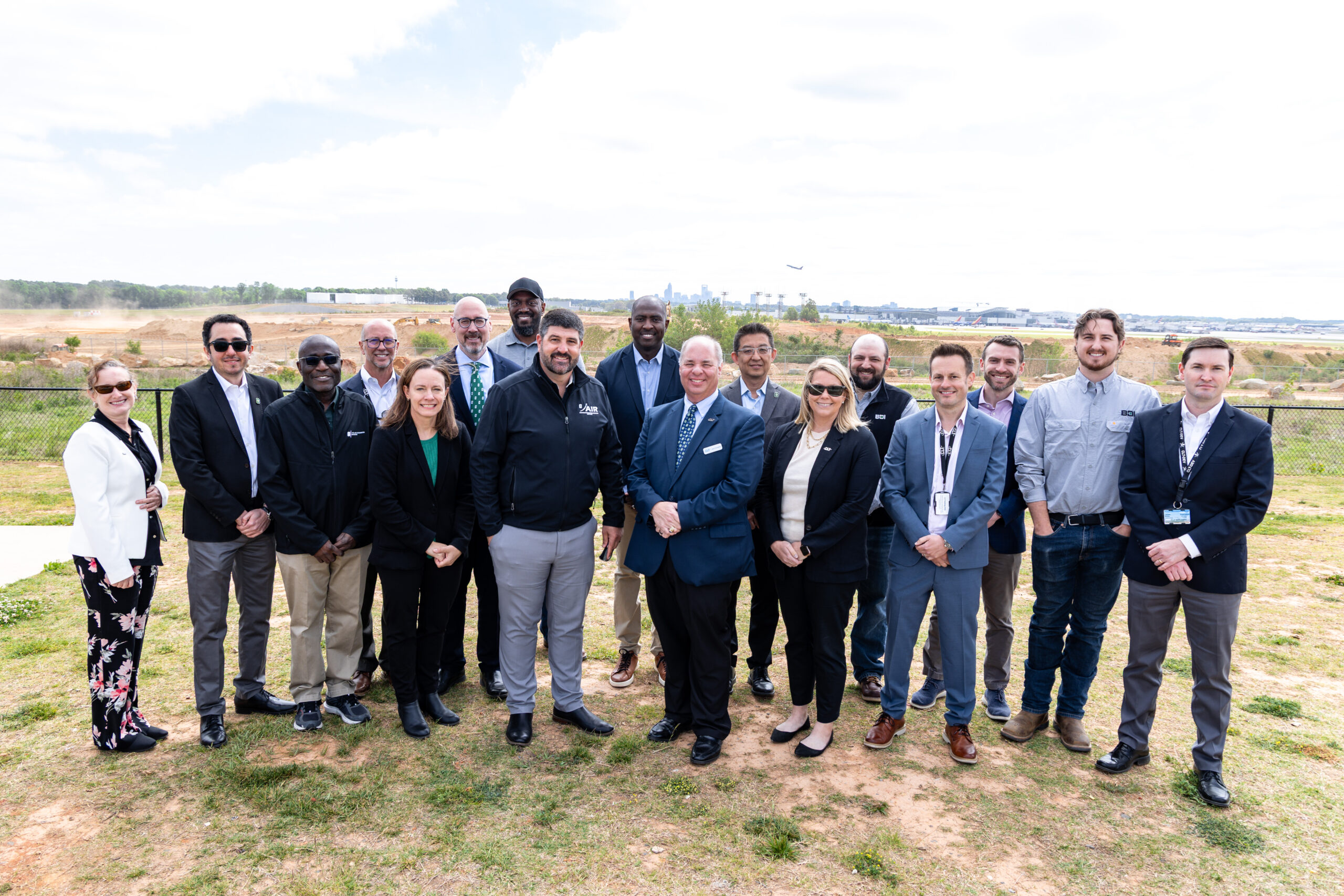
The programme builds on a long-standing collaboration with the university, under which the airport acts as a site for applied research. The approach is intended to improve how facilities are designed, built and maintained, while supporting operational safety.
Jack Christine, chief infrastructure officer at Charlotte Douglas International Airport said:This instrumentation and digital-twin project grew out of a strong partnership with UNC Charlotte, where the airport serves as a living laboratory for students. By incorporating advanced technologies and innovative solutions, we’re enhancing how we design, build and operate our facilities. Safety is and will always be our top priority, and this collaboration supports our ongoing commitment to modernising airport infrastructure. It reflects what can be achieved when working closely with Charlotte’s research university to turn innovation and research into real-world, cutting-edge results.
The runway scheme was identified in the airport’s 2016 master plan update to address increasing demand for air services. In 2025, the airport recorded more than 574,000 aircraft movements across its three existing runways.
A memorandum of understanding signed in September 2025 between the airport and the university’s Aviation and Innovation Research Institute led to the creation of the instrumentation and digital twin programme. The data gathered will be used locally for operational decisions and shared with the Federal Aviation Administration to inform future pavement design standards.
John Daniels, vice chancellor of research at UNC Charlotte said:This first-of-its-kind partnership puts Charlotte at the centre of aviation modernisation. By embedding technology directly into the runway, we aren’t just building infrastructure. We are creating valuable data, models and insights that will inform the future of airfield design nationwide. Just as important, this work creates unparalleled, hands-on research opportunities for our students, who will be learning under the leadership of Professor Tara Cavalline, principal investigator on the project. Together with our partners at the airport, we are advancing safer, smarter and more efficient aviation infrastructure for the future.
Funding for the digital twin element, valued at about 6.5 million USD, includes grants and in-kind contributions. The FAA has provided 2 million USD through its Airport Concrete Pavement Technology Program.
Construction of the new runway, measuring 10,000 feet in length and 150 feet in width, began in 2023 and is scheduled for completion in autumn 2027. Current works include concrete placement, drainage installation and the fitting of airfield electrical systems, alongside related infrastructure such as a new fire station.