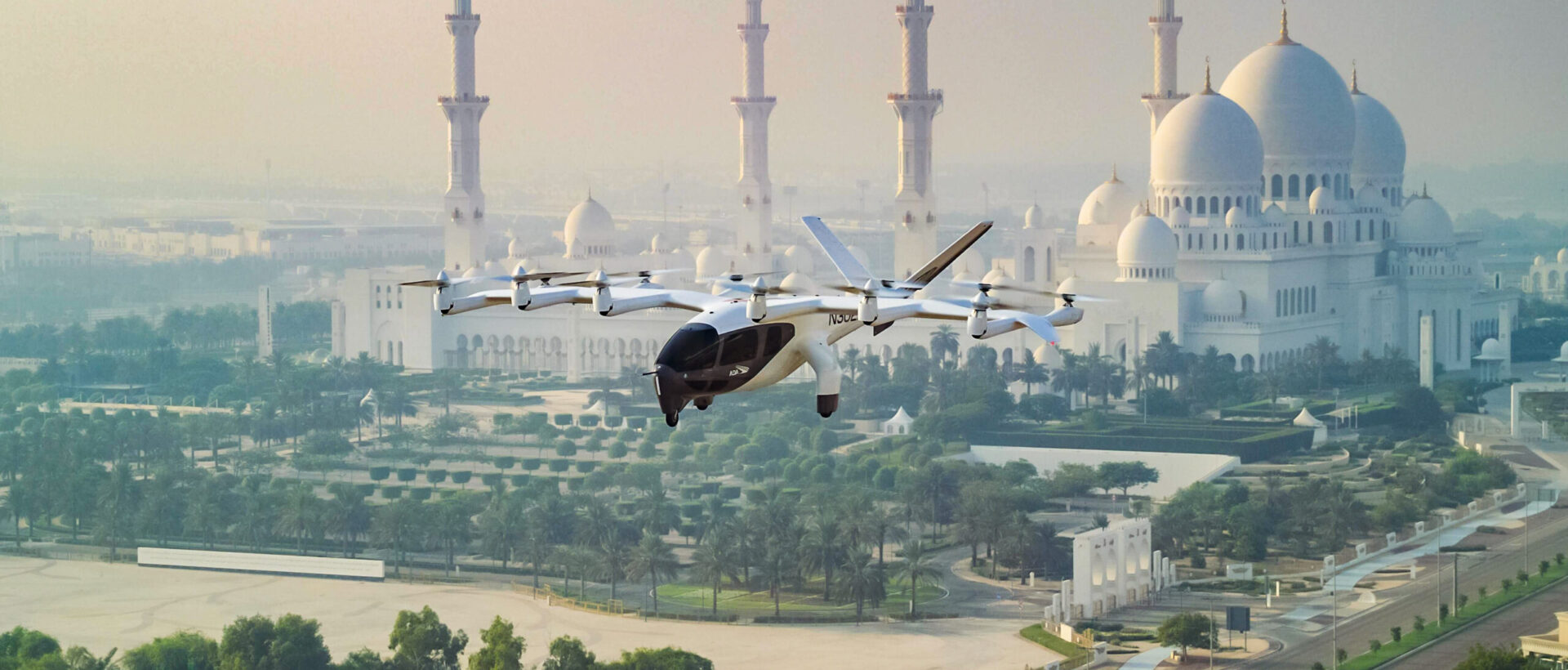
Progress in Advanced Air Mobility (AAM) is often discussed as incremental improvements in aircraft design, including new propulsion systems, quieter rotors, and more advanced avionics. However, the true challenge lies not only in engineering the vehicles but in managing the complexity of an integrated system operating in low-altitude urban airspace.
AAM refers to the emerging ecosystem of services such as air taxis, cargo drones, and other forms of on-demand or automated urban flight, all sharing the same airspace alongside existing aviation activity. To understand how complex this becomes, it can be useful to step outside aviation reality. Imagine, instead, that dragons exist and are fully integrated into modern transport networks.
Absurd? Maybe. But as a regulatory thought experiment, dragons are surprisingly useful. They behave like the most extreme version of challenges already emerging in AAM: unpredictable flight behaviour, non-standard vehicle design, contested landing infrastructure, and the need to integrate autonomous and human-controlled systems in shared airspace.
Arguably, dragons are what Advanced Air Mobility looks like when all constraints are maximised at once.
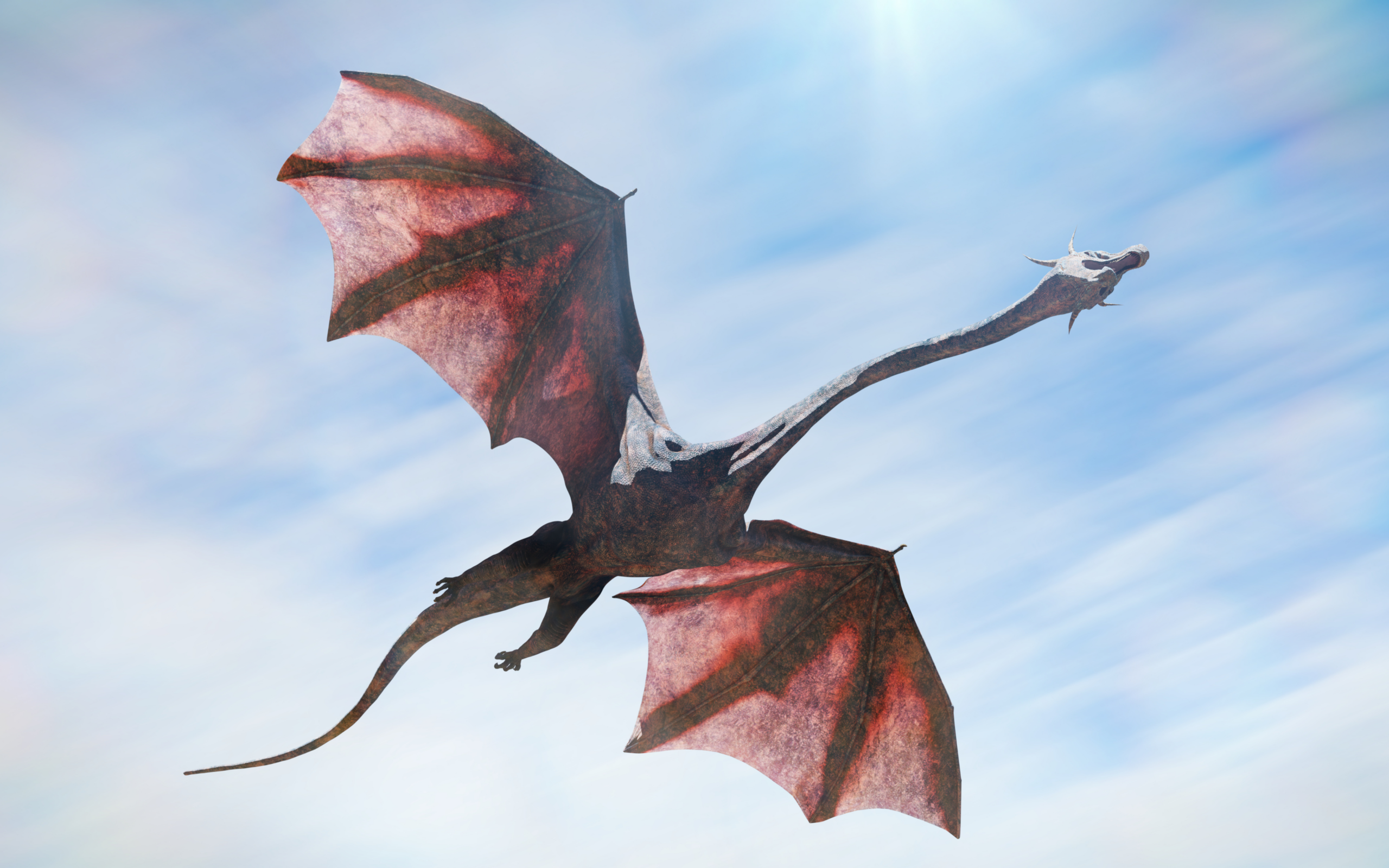
Airspace Management
Modern aviation depends on predictability. Commercial aircraft fly within structured airspace, along designated corridors, at assigned altitudes and speeds, under continuous coordination with air traffic control. Likewise, emerging AAM systems are being designed around the assumption that low-altitude traffic can still be organised into orderly digital routes.
Programmes such as the UK’s Future of Flight initiative and Europe’s U-space framework both envision a heavily managed urban airspace environment where drones, air taxis and conventional aircraft operate within predefined rulesets supported by automated traffic management systems.
Now introduce dragons.
Dragons present obvious fire risk concerns, just as eVTOL aircraft must account for thermal runaway, battery ignition, or in some future architectures, hydrogen combustion safety. These technologies provide comparable challenges in managing high-energy systems safely in dense urban environments.
Meanwhile, a dragon-based transport system would immediately stress the assumptions underpinning modern airspace regulation. Unlike conventional aircraft, dragons would not behave as fully standardised vehicles operating within tightly controlled performance envelopes.
Instead, regulators would face aerial users with:
- Highly variable speed, climb rates and endurance
- Irregular routing behaviour
- Unpredictable responses to weather, congestion or hazards
- A mixture of cooperative and non-cooperative navigation patterns
- Frequent deviation from assigned flight paths
The comparison with AAM becomes clearer when such traits are translated into current aviation concerns that may not seamlessly fit into existing or emerging regulations.
A dragon suddenly changing altitude to avoid turbulence mirrors the challenge of an autonomous eVTOL rerouting in response to weather or battery constraints. A dragon refusing to follow a designated corridor resembles the problem of non-compliant drones entering restricted urban airspace. A dense concentration of dragons above a city creates the same traffic-density challenge regulators anticipate from thousands of simultaneously operating autonomous air taxis.
In both cases, the problem is not solely the existence of more aircraft, but the emergence of diverse low-altitude airspace users operating with different capabilities, priorities and levels of predictability.
In recognition of these considerations, regulators are already moving away from traditional air traffic control models and towards digital traffic orchestration systems.
The UK’s Airspace Modernisation Strategy anticipates:
- Digitised airspace coordination
- Real-time traffic management services
- Automated conflict detection
- Greater autonomy in separation assurance
Similarly, the European Union Aviation Safety Agency (EASA) is developing a layered airspace system in which drones, autonomous aircraft, crewed aviation and emergency services continuously exchange operational data in real time.
A dragon-inclusive system would arguably intensify the urgency of these trends. Static flight corridors would quickly become impractical because dragons would not always behave consistently enough for rigid routing structures to work safely. Instead, airspace would need to become adaptive based on live conditions.
Unlike dragons, autonomous eVTOL systems are designed to operate predictably within certified limits. However, the case for adaptive airspace does not rely on individual unpredictability, but on system-level complexity: many vehicles, with different performance profiles, operators, and priorities, sharing the same airspace at the same time. Even fully predictable aircraft can generate unpredictable collective behaviour at scale. Dragons make this clearer by removing any assumption of standardisation.
In effect, dragons expose the logical endpoint of current AAM development: a more dynamic, software-defined sky where airspace management functions as a continuously optimised digital network, supported by automation.
Certification
Aviation safety regulation has historically relied on a foundational assumption that aircraft are engineered systems that can be certified to behave predictably within defined envelopes.
Dragons fundamentally violate that assumption.
They introduce:
- Biological variability instead of manufacturing consistency
- Performance drift over time, independent of maintenance cycles
- Behavioural unpredictability under environmental stress
- Hybrid propulsion characteristics not reducible to standard categories
In contrast, AAM vehicles are engineered, certified systems designed to behave predictably. However, compared to the conventional fixed-wing aircraft on which existing certification frameworks were built, they introduce variability in configuration, propulsion type, and software-defined flight control, thus exposing the same underlying tension.
This is pushing regulators such as EASA and the FAA toward performance-based certification frameworks, where:
- Systems are certified based on outcomes rather than design uniformity
- Continuous airworthiness monitoring replaces periodic checks
- Software integrity becomes as critical as mechanical reliability
This shift toward performance-based certification was already underway before eVTOLs arrived, but AAM has since sharpened its urgency. Here, the concept of dragons highlights a logical direction away from certifying machines and towards certifying behaviours within systems.
Landing Infrastructure
If airspace is the backstage challenge of AAM, infrastructure is the visible constraint.
Vertiports, the proposed landing and charging hubs for eVTOL aircraft, are already facing significant planning and integration challenges in dense urban environments. They must balance land availability, noise constraints, energy supply, passenger throughput, and integration with rail and road networks.
Now add dragons into the equation.
Their inclusion exaggerates existing pressures:
- Large and variable landing footprints
- Non-standardised approach paths
- Environmental impact constraints (heat, turbulence, safety buffers)
- Territorial behaviour limiting usable landing zones
While fantastical, this mirrors a real urban planning issue, with landing rights as a scarce, contested urban resource.
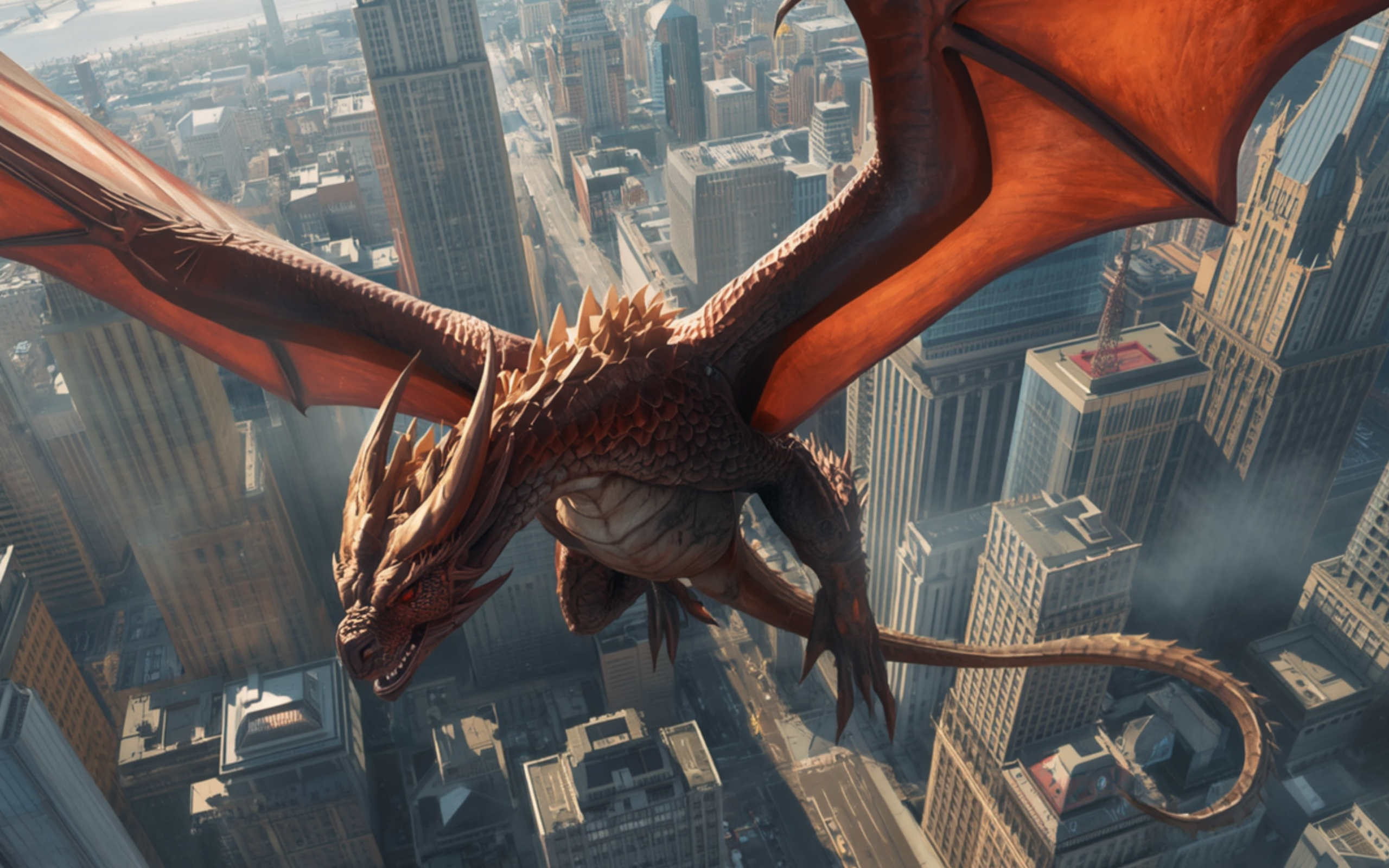
In practice, Advanced Air Mobility (AAM) will require distributed vertiport networks rather than centralised hubs, supported by dynamic landing slot allocation systems and closer integration with multimodal transport nodes such as rail and road interchanges. It will also depend on tight coupling between airspace scheduling and ground infrastructure capacity to ensure that arrivals, departures, and surface connectivity are coordinated efficiently.
The UK’s Future of Flight work explicitly acknowledges this direction of travel, emphasising the need for integrated planning across air and ground systems rather than treating them as separate operational domains.
Here, dragons would bring their own energy infrastructure requirements. While eVTOL operators must secure access to charging and energy capacity, dragon operators would likewise face the logistical challenge of ensuring a dependable supply of food. In both cases, vehicle operations would be constrained as much by energy provision as by airspace availability.
Dragons, in this sense, act as a stress test. They highlight the same constraint facing AAM: scarce urban space, interdependent systems, and the need to coordinate air and ground infrastructure dynamically rather than independently.
Why Dragons Belong in the Regulatory Conversation
It is easy to dismiss dragons as a rhetorical flourish, but their value lies in their ability to exaggerate the unresolved tensions in deploying AAM vehicles. Seen this way, they function as a diagnostic tool for the system-level challenges ahead.
For AAM to be successfully implemented, governments and industry must ensure the system can safely and reliably manage a high-density, mixed-capability airspace. In practice, this will require systems supported by automation for coordination and decision support, but ultimately governed through human oversight, regulatory authority, and clear accountability in safety-critical decisions—so that even in a sky full of dragons, nothing goes up in flames.