Leeds Bradford Airport (LBA) has announced the submission of proposals that would update planning conditions governing night-time operations, replacing a decades-old movement-based system with a modern noise-based framework already adopted at most UK regional airports.
The proposals, which have now been submitted to Leeds City Council, form the latest step in the airport’s long-term transformation programme.
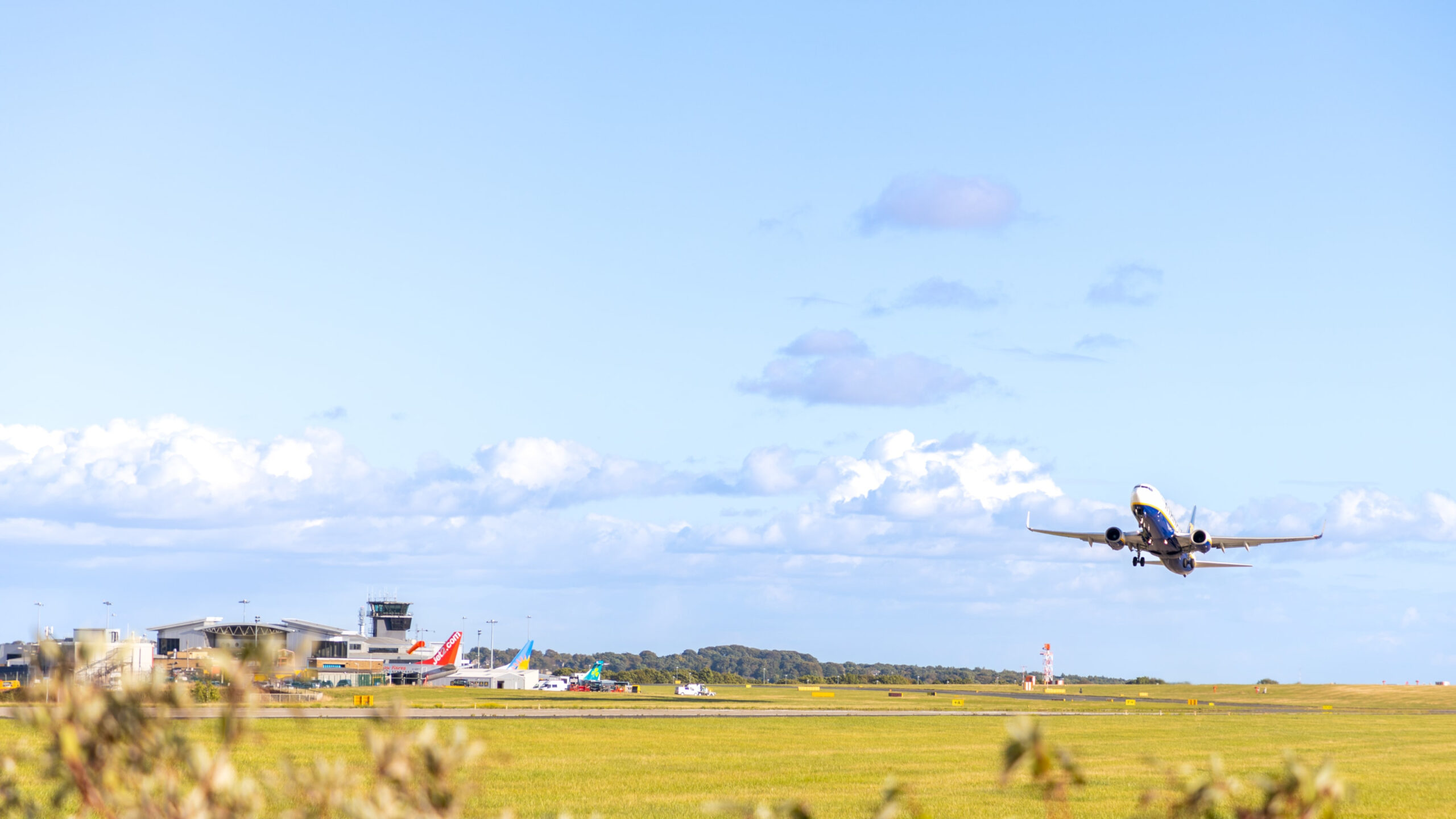
If approved, LBA aims to update planning conditions that control night flights at the airport, varying conditions across three areas:
- Convert Air Traffic Movement (ATM) restrictions to Quota Count System (QCS): Introducing a modern cap system which incentivises quieter, more environmentally friendly planes at LBA
- Condense night-time hours to 23:30 – 05:59: Modernising operational hours brings the airport in line with other UK airports, in keeping with standard European flight patterns
- Introduce a Night Noise Insulation Scheme (NNIS): Introducing a night noise insulation scheme to support the local community
These changes would retain existing limits on overall night-time noise, whilst also providing stronger incentives for airlines to operate newer, quieter and more fuel-efficient aircraft, contributing to environmental improvements alongside economic growth for the region as a whole.
In 2025, the airport saw the opening of a major terminal extension as part of its 200 million GBP investment programme, LBA:REGEN, with further refurbishment works set to continue through to 2027. These are hoped to enhance the overall passenger experience whilst supporting future growth in connectivity, with the investment programme set to reflect LBA’s confidence in Yorkshire’s long-term economic potential, as well as its commitment to providing infrastructure that meets the needs of a modern regional economy.
As one of the UK’s first airports to commit to achieving Net Zero carbon emissions from its own operations (Scopes 1 and 2) by 2030, LBA’s proposals to transition to a noise-based system are hoped to support its ambitions by encouraging airlines to operate newer generation aircraft with improved fuel efficiency and lower noise impacts.
The airport has thus far achieved Level 4 Airport Carbon Accreditation, recognising its work to align carbon reduction activities with the goals of the Paris Agreement and engage partners across the aviation ecosystem in reducing emissions. Over the last several years, LBA has worked to remove gas heating from terminal operations, as well as electrify the airport’s airside light vehicle fleet.
Alongside the proposed modernisation of night-time operating conditions; LBA has also announced plans for a new Night Noise Insulation Scheme, which has been designed to provide practical support for homes and community facilities most affected by aircraft noise. This scheme would offer grant incentives towards insulation measures, including glazing, ventilation improvements and, for the first time at a UK airport, funding for bedroom air conditioning in eligible properties.
The airport has stated that the combination of maintaining a fixed overall noise limit while introducing targeted community support represents a ‘balanced approach that benefits both local residents and the wider regional economy’.
Vincent Hodder, CEO, Leeds Bradford Airport, said:Leeds Bradford Airport is transforming into a modern gateway for Yorkshire and a catalyst for regional growth. Through significant private investment, industry-leading sustainability initiatives and a commitment to supporting local communities, we are building an airport that is fit for the future.
Today we support thousands of jobs and generate hundreds of millions of pounds for the regional economy. As we deliver our Vision 2030 strategy and LBA:REGEN, that contribution will grow significantly, helping connect Yorkshire's businesses, people and communities to opportunities across the UK and around the world.
Modernising operating conditions that were introduced more than three decades ago is an important part of that journey. It enables us to encourage quieter, cleaner aircraft while maintaining robust environmental controls and providing meaningful support for our neighbours.
This is about creating a stronger, more sustainable and better-connected Yorkshire for the decades ahead, this is not the ‘thousands more night flights’ some would claim. The QCS LBA is applying for is set to match the existing noise footprint. The same noise limits, allocated differently.