Cenex, in collaboration with the International Centre for Digital Trade and Innovation (iC4DTI), has announced its participation in the Feasibility Studies 2 competition, which forms part of the UK Government’s Connected and Automated Mobility (CAM) Pathfinder programme.
The competition aims to provide support for projects looking to develop robust, investment-ready business cases for deploying CAM solutions in near-commercial environments.
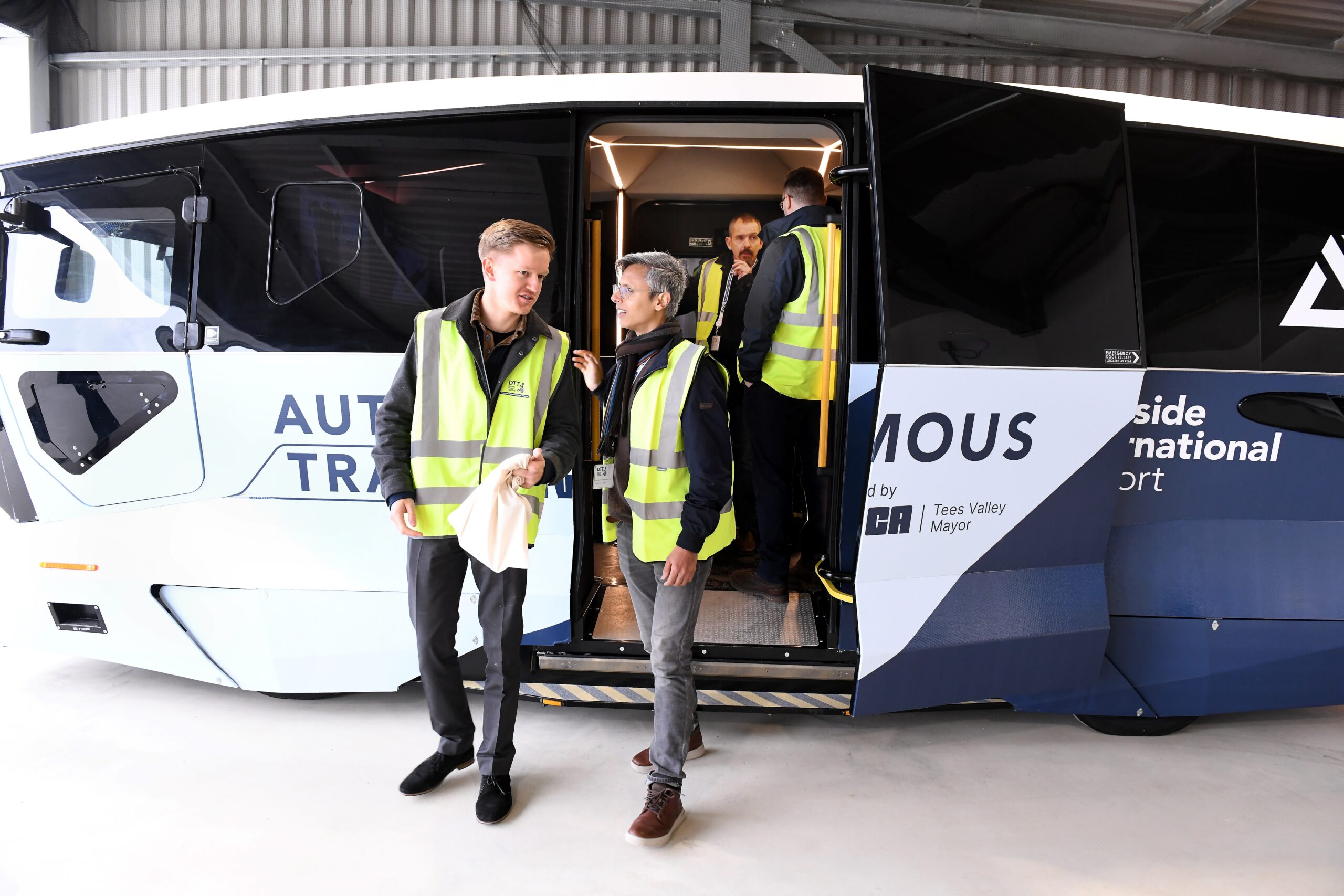
Project TACTIC (Teesside Autonomous Corridor for Trade Integration and Clearance) is a six‑month feasibility study led by iC4DTI. The project, which is being delivered with Cenex as project partner, project aims to develop an investment‑ready business case for a driver‑out Connected Automated Mobility (CAM) freight service operating along the Teesport–Teesside International Airport corridor within the Teesside Freeport.
Teesside is looking to present itself as a compelling environment to launch at scale, and is supported by three large, secure estates: Teesside International Airport (~818 acres), Teesworks (~4,500 acres) and Wilton International (~2,000 acres). These sites will allow for initial off-highway deployment, enabling operator model and Remote Operations Centre (ROC) procedures to be proven before the implementation of a potential extension along the A66 corridor.
Nick Davies, Director of iC4DTI, said:If successful, TACTIC will show both industry and government the benefits that can flow from trade digitalisation, and how this can contribute to the growth agenda everyone is prioritising.
A key focus of the feasibility study concerns the approach to freight compliance. Currently, customs and safety processes can introduce delays and congestion, but TACTIC will look to explore a new trade‑facilitation layer that brings together trusted, real‑time vehicle data—such as location, secure seals and weight—with digital trade documentation. This, if successful, will enable checks to be prepared and resolved whilst the vehicle is in motion, allowing autonomous freight vehicles to arrive pre-cleared, reducing dwell time and improving reliability for time-sensitive goods.
Elsewhere, the assessment will take into consideration commercial viability, examining whether such a service can operate without a safety driver in Teesside, defining the roles and responsibilities required for safe operation, identifying high‑level technology and control requirements, and setting out the steps needed from regulators and insurers.
As part of the project, Cenex is set to provide economic analysis, examining costs, revenue options and the wider benefits of faster, more predictable freight flows.
TACTIC is funded by the UK Government as part of the CAM Pathfinder programme, delivered by the Department for Business and Trade’s CAM team in partnership with Innovate UK and Zenzic.