AeroDelft and its partners have completed a series of ground tests involving a hydrogen-powered aircraft at Rotterdam The Hague Airport, marking a step in the development of hydrogen aviation.
The tests included hydrogen refuelling, propulsion system checks and a taxi run. The programme was designed to gather practical experience with hydrogen operations in an airport environment and to evaluate the technology being developed for use in future aircraft.
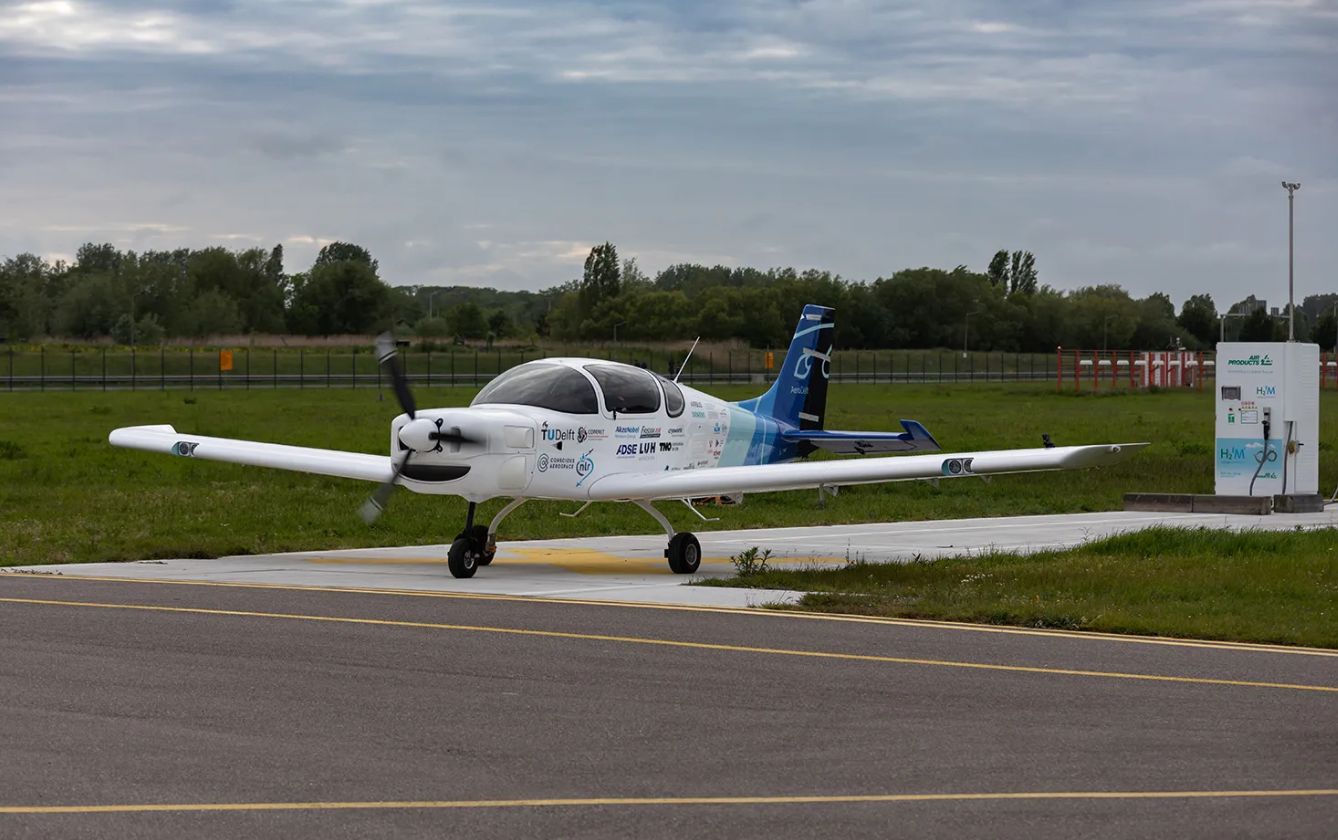
The tests involved the use of gaseous hydrogen and enabled the team to assess multiple aspects of aircraft operation.
Team manager Isha Moharir said:We carried out various ground tests with gaseous hydrogen; for instance, we were able to refuel with hydrogen at the airport, test our aircraft’s propulsion system and, for the first time, taxi the aircraft at an operational airport.
This is how we are moving step by step towards sustainable aviation, always asking ourselves: how will this work at a real operational commercial airport? That is why this test, carried out on an operational airport, is so important to us.
The taxi tests form part of AeroDelft’s phased approach to developing hydrogen-powered flight. Previous work focused on individual subsystems, while in 2025, the team tested a complete powertrain operating on liquid hydrogen in a laboratory environment.
The latest trials moved testing from the laboratory to an operational airport setting. Gaseous hydrogen was selected for the current phase because the technology is more mature and allows further evaluation of the propulsion system in real-world conditions.
The airport environment also provided an opportunity to assess safety procedures and operational requirements. AeroDelft worked with partners including research test pilots Alexander in ’t Veld and Hans Mulder, along with specialists from the TU Delft Flight Test Laboratory, to conduct risk assessments and develop an operational taxi test plan.
AeroDelft plans to continue developing systems required for flight using liquid hydrogen. The next stage of the project will focus on creating a storage tank and distribution system suitable for carrying liquid hydrogen onboard the aircraft.
The current aircraft is expected to be capable of remaining airborne for around 40 minutes when operating on a full tank of gaseous hydrogen. AeroDelft estimates that the use of liquid hydrogen, which has a higher energy density, could extend flight duration to approximately two hours in future versions of the aircraft.