The recent fatal runway incident at Denver International Airport (DEN) has highlighted one of aviation’s key operational challenges in securing vast airport perimeters and airside environments in real time.
On the night of 8 May 2026, a man gained unauthorised access to the airfield at Denver International Airport by climbing over an 8-foot perimeter fence and entering an active runway area. Within minutes, he was struck by a departing Frontier Airlines Airbus A321 during takeoff for a flight bound for Los Angeles. The collision caused an engine fire, forcing the pilots to abort takeoff and evacuate all 224 passengers and seven crew members using emergency slides. Twelve people suffered minor injuries during the evacuation. Authorities later ruled the man’s death a suicide.
Notably, initial alarm activations were reportedly mistaken for wildlife activity, allowing the intrusion to go unchallenged until the aircraft crew reported the collision during takeoff.
While investigations are ongoing, the event raises uncomfortable but necessary questions about whether this situation could have been prevented through more advanced detection, surveillance, and integrated airside monitoring systems.
Airport Perimeter Security
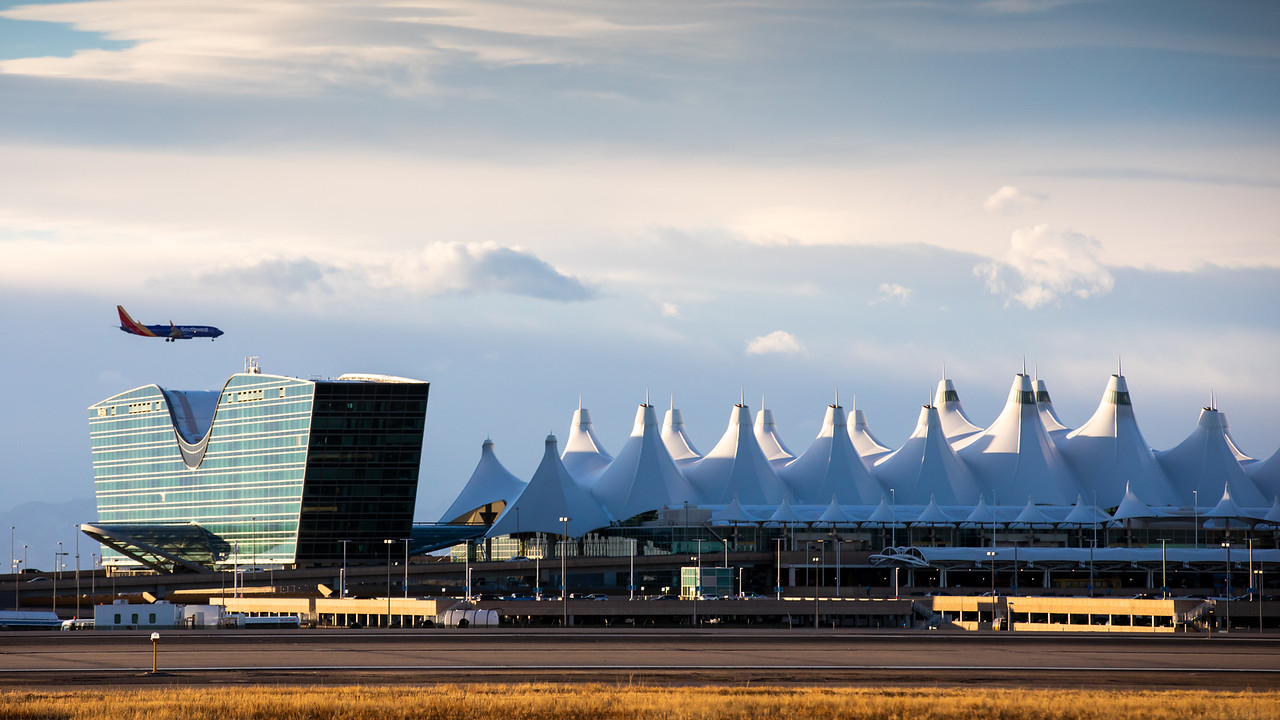
Large hub airports such as Denver International Airport face uniquely difficult security conditions. DEN covers more than 52 square miles and operates six non-intersecting runways, making it one of the largest airport footprints in North America.
Traditional perimeter systems, including fencing, motion sensors, patrols, and standard CCTV, were arguably designed for a different operational era with a smaller scale. Modern airports now contend with:
- Enormous open-air environments
- Wildlife interference
- Low-visibility conditions
- Growing operational complexity
- Increasingly sophisticated security expectations
In the Denver case, reports indicate that the initial intrusion alarm may have been dismissed because personnel believed wildlife had triggered the system.
To prevent such errors, modern thermal imaging and AI-enhanced runway surveillance systems are specifically designed to reduce these false positives by distinguishing between humans, animals, vehicles, and environmental movement in real time.
Thermal Detection
Thermal detection technology has matured rapidly over the past decade and is now capable of continuous long-range monitoring regardless of darkness, fog, snow, or glare.
Notably, DEN’s security system is equipped with thermal detection systems and recorded surveillance footage of the individual on the runway shortly before impact. The issue, therefore, may not be an issue of the surveillance existing, but whether systems were sufficiently integrated into active operational response workflows.
Advanced thermal detection systems today can:
- Classify intrusions automatically
- Trigger graduated alerts
- Integrate directly with airport operations centres
- Notify airfield teams within seconds
Combined with AI analytics, these systems can drastically reduce reliance on manual interpretation.
Predictive Runway Surveillance
Traditional airport CCTV systems are often reactive by nature, which is valuable for investigations after an incident occurs, but less effective at proactively preventing runway incursions.
The next generation of runway surveillance platforms is moving toward predictive monitoring.
Computer-vision systems using machine learning can now:
- Detect unauthorised movement patterns
- Monitor runway occupancy continuously
- Track pedestrian and vehicle incursions
- Alert operators before an active conflict develops
Research into AI-based airside surveillance frameworks has already demonstrated extremely high accuracy rates for runway and taxiway monitoring under operational conditions. This is crucial, as runway safety increasingly depends on the speed of recognition, not just camera coverage.
In response to the growing risks and complexities, many airports continue to invest heavily in additional camera infrastructure. Denver International Airport itself has recently expanded high-resolution camera deployments across airport property.
However, the DEN tragedy demonstrates that adding more cameras does not automatically improve operational awareness. Without intelligent analytics, centralised command integration, and automated escalation protocols, surveillance systems arguably risk overwhelming operators with fragmented information.
Instead, the industry should arguably consider intelligent CCTV software, AI-assisted anomaly detection, integrated thermal monitoring, runway intrusion analytics, and centralised airside command platforms.
Airport Safety
It is also important to consider that technology alone may be unable to solve perimeter security challenges.
Airport accident prevention consultants and operational risk specialists play a critical role in identifying procedural blind spots, evaluating response timelines, and stress-testing airport security assumptions.
Indeed, one of the clearest lessons emerging from Denver is the danger of normalisation, where repeated false alarms condition teams to deprioritise alerts.
As such, the Denver runway tragedy may become a catalyst for broader investment in both technology and staff training. This may include:
- Thermal intrusion detection
- AI-enabled runway surveillance
- Intelligent CCTV software
- Integrated airport safety consulting.