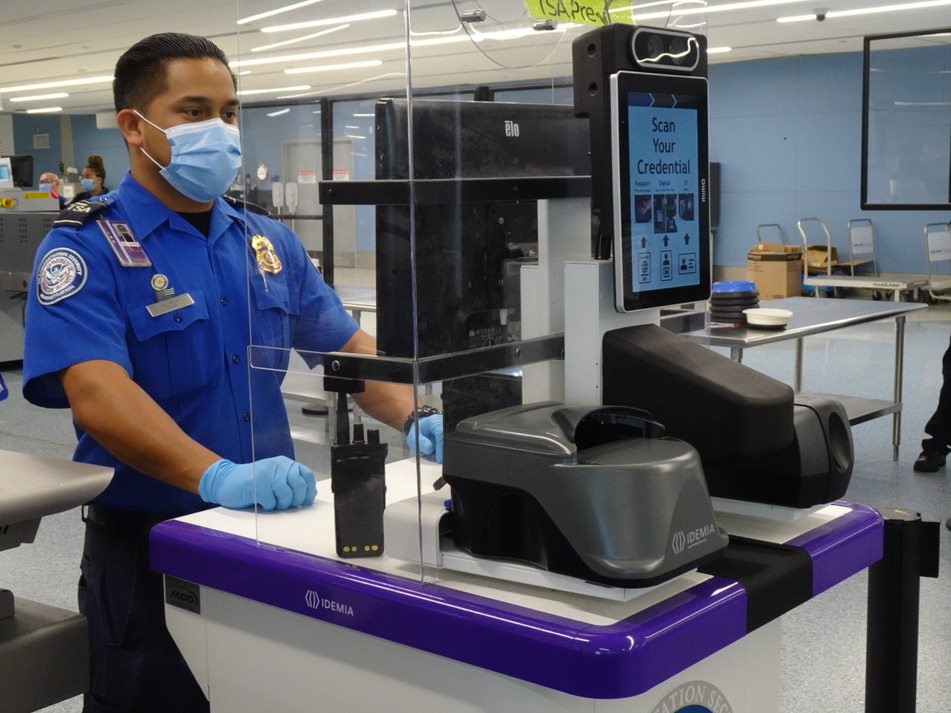
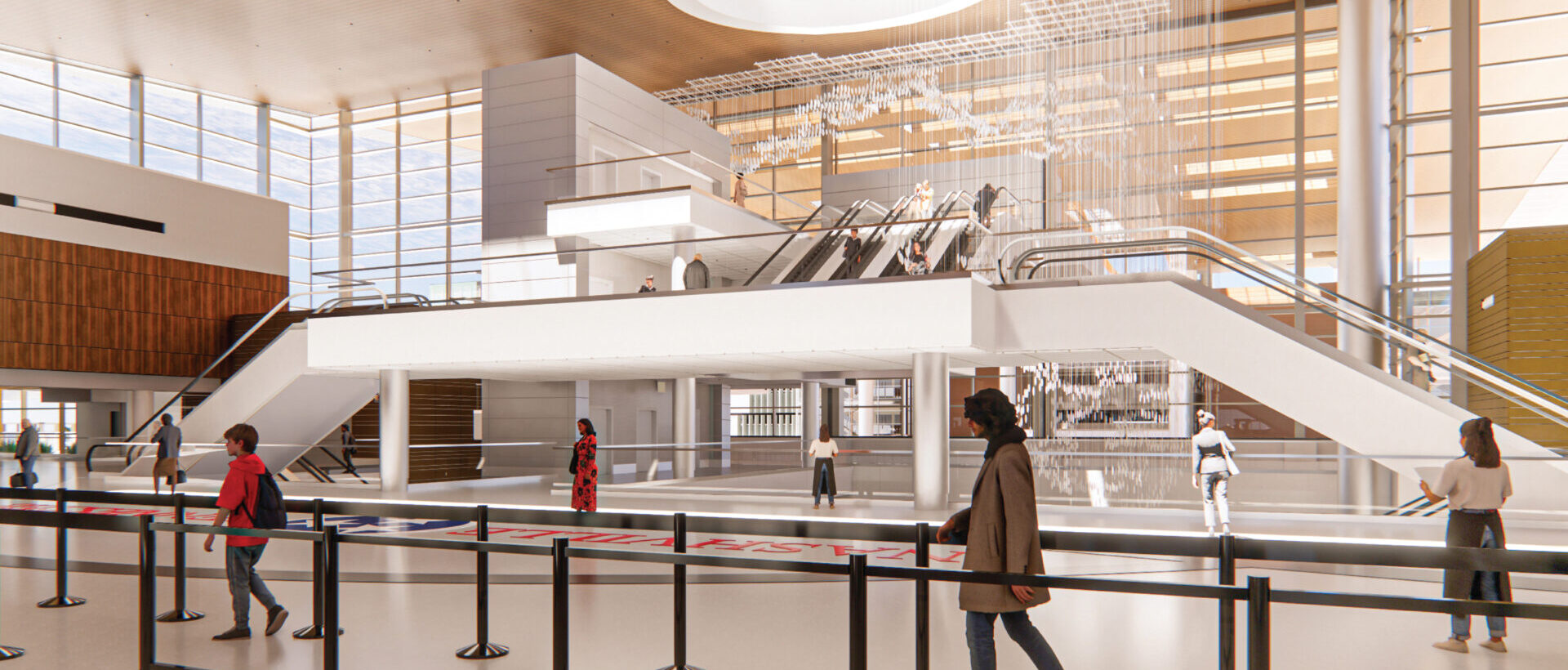
U.S. Customs and Border Protection (CBP) preclearance allows passengers to complete immigration, customs, and agriculture inspections before departing for the United States. Travellers arriving from these airports are processed as domestic arrivals, which can shorten connection times and reduce congestion at U.S. entry points.
This system supports cross-border travel while allowing authorities in both countries to address border security risks earlier in the travel process.
However, while the concept is well established, its geographic footprint remains relatively limited and unevenly distributed, with 16 preclearance sites worldwide.

Current Preclearance Locations
Preclearance facilities are currently available at a select group of international airports, primarily in Canada, Ireland, the Caribbean, and the Middle East.
Canada
In Canada, the service is available at:
- Calgary International Airport (YYC)
- Edmonton International Airport (YEG)
- Halifax Stanfield International Airport (YHZ)
- Montréal–Trudeau International Airport (YUL)
- Ottawa Macdonald–Cartier International Airport (YOW)
- Toronto Pearson International Airport (YYZ)
- Vancouver International Airport (YVR)
- Winnipeg James Armstrong Richardson International Airport (YWG)
- Billy Bishop Toronto City Airport (YTZ)
The most recent addition to this list was Billy Bishop Toronto City Airport (YTZ), where the preclearance facility opened on 10 March 2026 through cooperation between the Government of Canada and U.S. Customs and Border Protection.
Ireland
Ireland is the only country in Europe where passengers can pass through U.S. preclearance at their departing airport. The service is available at:
- Dublin Airport (DUB)
- Shannon Airport (SNN)
This arrangement is made possible by formal treaties signed between the US and Ireland, enabling American Customs and Border Protection (CBP) officers to operate on Irish soil. It is also facilitated by significant infrastructure investments made in Irish airports to accommodate the facilities.
Caribbean
In the Caribbean, U.S. preclearance is available at a small number of high-traffic leisure and hub airports. Facilities are currently in operation at:
- Lynden Pindling International Airport (NAS), Nassau, Bahamas
- Queen Beatrix International Airport (AUA), Aruba
- L.F. Wade International Airport (BDA), Bermuda
These locations are particularly significant for outbound leisure travel to the U.S., where seasonal peaks can place pressure on arrival processing at American airports. By completing inspection procedures before departure, passengers benefit from a more streamlined arrival experience, while airlines gain more predictable flow management on heavily travelled routes.
United Arab Emirates
In the United Arab Emirates, U.S. preclearance is available at:
- Abu Dhabi International Airport (AUH)
This is a result of a formal bilateral agreement between the United States and the United Arab Emirates, combined with Abu Dhabi’s strategic role in long-haul aviation and its willingness to meet the operational and legal requirements needed to host U.S. border control functions.
Implications for Airports and Airlines
For airports, offering preclearance can influence airline network decisions. Flights departing from preclearance locations can arrive at U.S. airports without requiring international arrivals facilities, which may open access to additional destinations and improve scheduling flexibility.
Airlines may also benefit from more predictable arrival processes and shorter connection times for passengers transferring within the United States. Thanks to preclearance, they can access less expensive U.S. domestic gates with more flexible arrival times.
Furthermore, from a government perspective, the system increases collaborative communication between the U.S. and host governments.
Operational Considerations
Preclearance shifts border processing upstream, which can ease demand on U.S. airport infrastructure. At the same time, it requires dedicated space, staffing, and bilateral agreements at the host airport. Not all airports have the physical capacity or traffic profile to justify such an investment.
From a passenger perspective, the experience can be more consistent, though it naturally introduces additional processing time before departure, which may require an earlier airport arrival.