Matthew Insley
Director of Global Strategic Alliances, Biometric Identity Technologies, HID
First-attempt facial verification success measures whether a passenger can be verified in a single try, without repositioning, rescanning or being pulled into manual review. Unlike an accuracy score recorded under controlled lab conditions, it reflects how a system actually performs in real airport environments — and it’s the real test of whether a biometric investment delivers operational value.
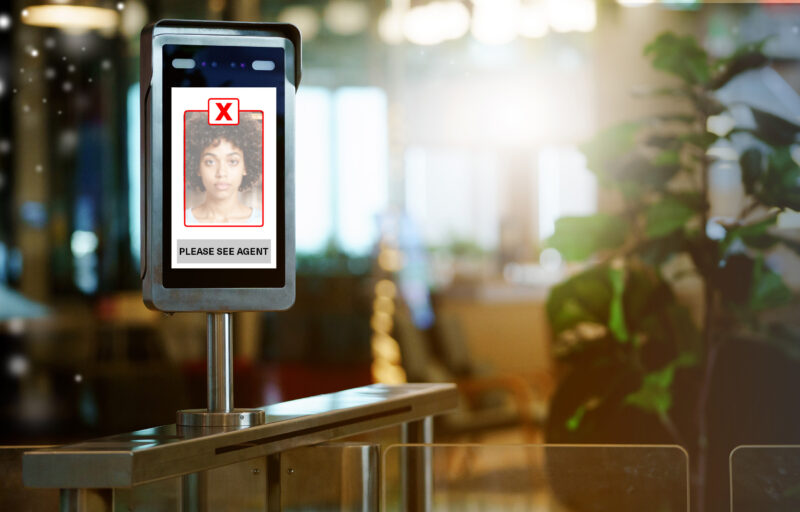
A British traveller at Denpasar International Airport in Bali was repeatedly turned away by the automated passport gates. The system kept trying to match his passport photo, not to his face, but to the image of David Bowie on his t-shirt. After five attempts across three gates, he finally got through by covering his shirt.
It’s an amusing story. It’s also a revealing one: a biometric system can perform well in testing and still be thrown by something as ordinary as a t-shirt.
The stakes for getting this right have never been higher. Airports are under more pressure than at almost any point in their history. Passenger numbers keep climbing. In the US alone, the Transportation Security Administration (TSA) regularly screens millions of travellers a day — and manual verification simply can’t scale to meet current and projected numbers.
At the same time, global security requirements have grown more stringent, requiring high-confidence identity verification, all while travellers expect a seamless experience from curb to gate. To add to the challenge, many airports must tackle this without expanding their infrastructure or workforce.
Biometric verification has become a strategic investment for airports seeking to meet these demands. What started as a convenience, a faster way to move passengers through security, immigration and boarding, has become an operational necessity. It is now built into a growing number of airport checkpoints across the passenger journey.
Lab Accuracy vs Real-World Performance
Deploying biometric systems is only the first step. The challenge is getting them to perform reliably the first time, for every passenger. That means accounting for a set of real-world factors that controlled test environments don’t always replicate.
While lab conditions typically offer consistent lighting and cooperative testers looking straight at the camera, the reality in a live terminal is very different. Lighting can shift dramatically, from harsh glare near security screening to shaded corridors elsewhere in the building. Large numbers of passengers move through the terminal throughout the day. They represent a wide range of ages, skin tones and physical characteristics. Systems must also be prepared to detect deliberate presentation attacks.
Then there is fluctuating passenger volume. The same checkpoint may operate steadily during a quiet spell, then face a sudden surge when a bank of long-haul flights lands. Yet every one of those passengers expects the same instant, seamless experience, regardless of how busy the terminal is. That’s the everyday reality of a live airport environment.
This is why accuracy alone is the wrong measure. The real challenge is consistency at scale: performing the first time, every time, across every variable a live terminal presents.
The Operational Ripple Effect
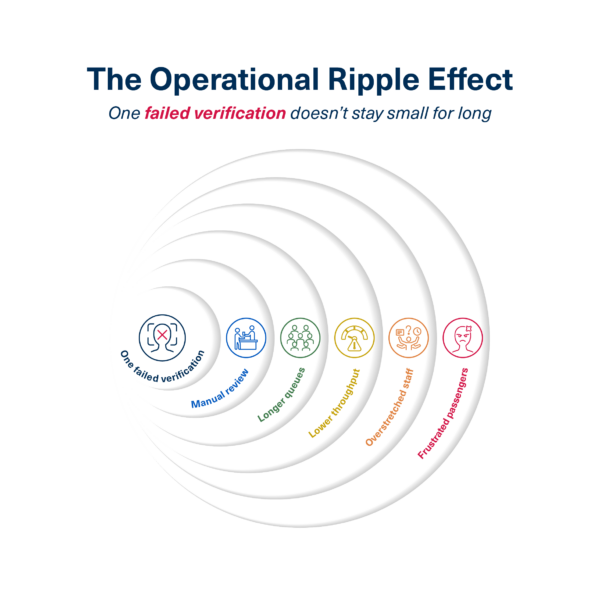
Failures like the David Bowie t-shirt mix-up carry a real cost. They can create an operational ripple effect across throughput, staffing and passenger experience.
A failed match can cause a chain reaction, prompting a second attempt, then often a third. If those also fail, it escalates to manual review, where a staff member steps in, checks documents and clears the passenger through the very process biometrics was installed to automate.
Each of these steps takes time, and that time spreads well beyond a single passenger. Queues start to build, throughput drops, more staff are pulled in to manage the backlog, and passenger experience gets measurably worse as travellers are forced to wait in a queue that wasn’t supposed to exist.
This is why the real cost of a failed verification is not the failed match itself. A single mismatch, corrected in seconds, may seem a non-event. The cost is what it triggers next. At the scale of an airport processing tens of thousands of passengers a day, a small first-attempt failure rate can cause major operational challenges.
The operational ripple effect: one failed verification quickly and quietly becomes a throughput problem, a staffing issue and a source of passenger frustration.
What Live Deployments Reveal
These consequences aren’t inevitable. But preventing them takes more than a better algorithm. In live deployments, the systems that achieve first-attempt success share a few traits that matter more than accuracy scores alone.
- Capture a Usable Image the First Time
High-quality image capture is the starting point. A system that only produces a usable image from a clear, well-lit, front-on face will struggle in a terminal. Capture needs to perform across the lighting conditions, passenger poses and facial angles airports actually present, not just those controlled in a lab. Every usable first image avoids a retry. - Deliver Consistent Performance Across Passenger Populations
A passenger population drawn from every part of the world needs a system trained on representative data. When a biometric system performs consistently across demographics, every traveller benefits from the same fast, reliable verification experience. That consistency is also what makes biometric verification fair: every passenger is treated the same, regardless of who they are. - Keep Passengers Moving Without Repositioning
A wide field of view reduces how often passengers need to stop, reposition or rescan, supporting smoother throughput at a busy checkpoint. It can also accommodate passengers of different heights and mobility requirements, including wheelchair users, without staff repeatedly repositioning the capture device. - Maintain Fast, Secure Verification at Peak Volume
Processing biometric data at the point of capture can reduce latency and reliance on network connectivity, supporting fast, reliable verification during periods of high passenger volume. It can also strengthen data security and privacy by limiting the need to send sensitive data to the cloud. - Reduce Spoofing Risk Without Adding Friction
Advanced presentation attack detection (PAD) helps distinguish a live passenger from a photo, video, mask or, as Bali showed, even a face printed on a t-shirt. This strengthens protection against spoofing while allowing legitimate passengers to move through verification without unnecessary intervention.
Together, these traits separate a system that works in a demonstration from one that performs consistently in a live terminal.
The Questions Every Airport Should Be Asking
If first-attempt success is the real test, it should shape how biometric systems are evaluated. Before investing, ask vendors:
- What is your first-attempt verification success rate in live airport deployments, not just in lab testing?
- How does performance hold up across different lighting conditions and passenger populations?
- How is your presentation attack detection tested and certified, for example against ISO/IEC 30107-3?
- Where is biometric data processed, and how is it protected?
- How does verification speed hold up at peak passenger volumes?
From Accuracy Scores to Operational Outcomes
When a system is built for real-world conditions, the payoff shows up where airports feel it most.
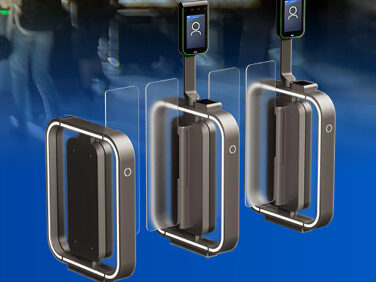
Across a fleet of biometric eGates deployed at major US airports, first-attempt facial verification has delivered up to 5x faster passenger verification compared with manual processing and roughly 50,000 additional travellers processed per day. The deployments also led to labour efficiency gains of up to 25% and a 14-point rise in traveller satisfaction scores.
These are the business outcomes that should frame how airports evaluate biometric investment — not lab accuracy claims alone. A system that performs well in testing but inconsistently at the checkpoint hasn’t solved the problem airports actually have. One that gets it right the first time, for the passenger standing in front of it, has.
To get deeper insights, watch HID’s on-demand webinar, The Hidden Cost of Failed First-Attempt Facial Verification — And How to Prevent It.