As policymakers revisit proposals to expand private-sector involvement in airport security, the debate over the future of the Transportation Security Administration (TSA) has reentered the spotlight.
Earlier this month, President Donald Trump unveiled a proposal to begin privatising parts of the TSA, marking a significant shift in how airport security could operate in the United States.
The plan was outlined in the White House’s 2027 budget proposal. It would expand the use of private contractors to conduct passenger screening at certain airports, particularly smaller regional hubs. This move is framed as a cost-saving measure and a way to reduce reliance on federal workers amid ongoing staffing and funding challenges.
However, labor organisations like the American Federation of Government Employees (AFGE), which represents TSA officers, strongly oppose such moves and have warned that they could undermine both security and workforce stability.
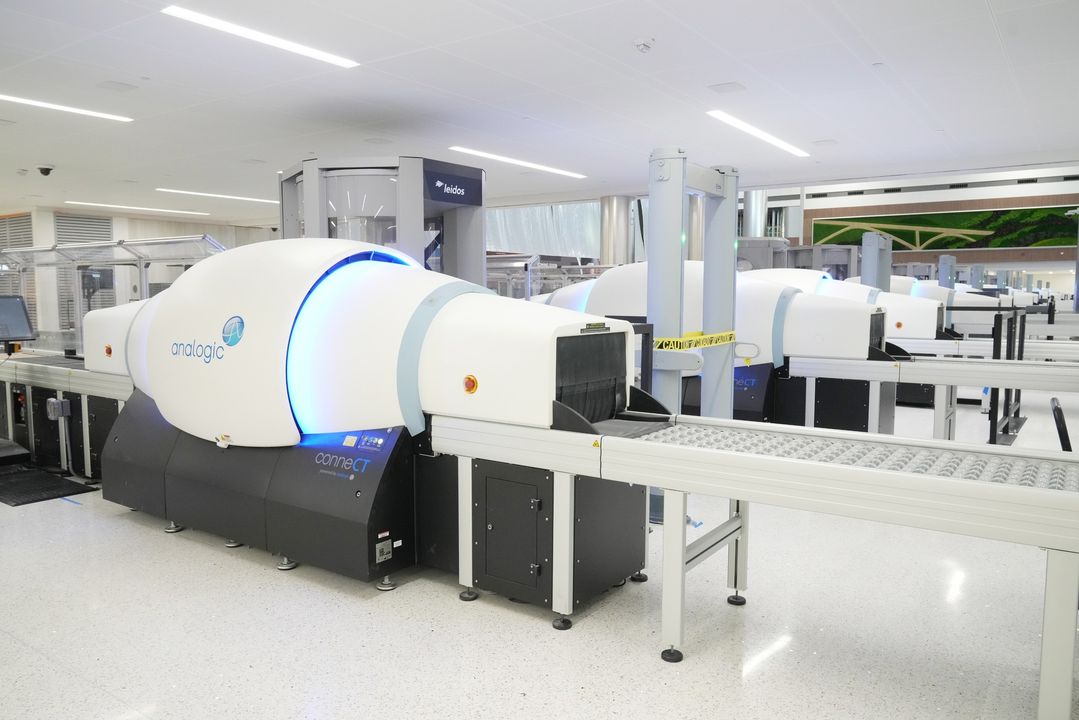
AFGE’s longstanding position is based around three key concerns.
1. A Return to Pre-9/11 Risks
AFGE has argued that privatisation risks echoing vulnerabilities that existed before the September 11 attacks, when airport screening was handled by private contractors.
At the time, low wages, minimal training, and high turnover were common. After 9/11, the federal government created the TSA to standardise and professionalise aviation security.
While today’s privatisation proposals would still operate under TSA oversight, such as through the Screening Partnership Program, AFGE argues that expanding this model introduces fragmentation into a system designed for national consistency.
Their concern questions whether uniform enforcement can be maintained across a larger, profit-driven network of contractors.
2. Profit Incentives vs. Public Safety
A central argument from AFGE is that private screening companies are structurally incentivised to cut costs, not maximise security.
According to the union’s position:
- Contracts are often awarded competitively, favouring lower bids
- Lower bids can translate into reduced pay, fewer benefits, and tighter staffing
- Workforce conditions directly affect alertness, morale, and retention
AFGE has consistently emphasised that security outcomes are tied to workforce stability. TSA officers are federally trained and employed with the explicit mission of protecting the public, not generating profit.
Critics of privatisation argue that even if standards remain unchanged, the incentives behind how those standards are met would shift.
3. Staffing, Retention, and Institutional Knowledge
Another major concern is workforce disruption. AFGE points to years of effort to reduce attrition within the TSA, highlighting improvements in pay and working conditions that helped stabilise the workforce in the mid-2020s.
Privatisation, they argue, could reverse that progress by:
- Encouraging experienced officers to leave federal service
- Increasing turnover under private contractors
- Creating staffing gaps that affect screening efficiency and wait times
Scaling up private screening nationwide would require significant hiring and retraining, raising questions about short-term disruptions.
Counterpoint: Federal Instability Is Already Straining TSA
Notably, during the ongoing 2026 funding crisis affecting the Department of Homeland Security, tens of thousands of Transportation Security Administration officers have faced delayed or reduced pay, with some working for weeks without full compensation.
The consequences have been visible:
- Hundreds of TSA officers have resigned, while many others have called out of work due to financial hardship
- Absenteeism has surged, with some airports seeing significant staffing gaps
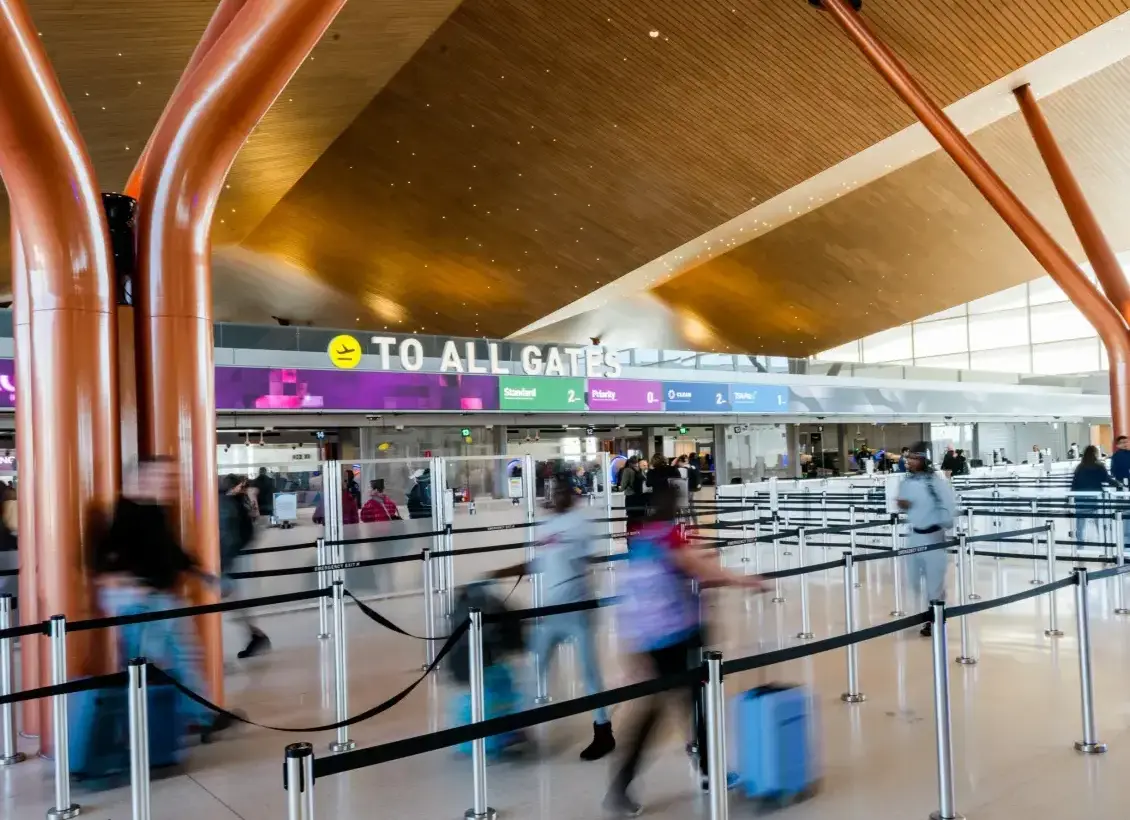
- Security lines have stretched for hours at major airports during peak travel periods
In some cases, officers have taken second jobs or struggled to cover basic living costs, raising concerns about morale and retention.
Supporters of privatisation argue that a contractor-based system could be better protected from political gridlock, allowing workers to be paid consistently even when Congress fails to pass funding bills. They also suggest that private firms may have more flexibility in hiring and staffing during disruptions.
However, critics counter that these disruptions are not a failure of the TSA model itself, but of broader political funding disputes. From their perspective, the solution is more stable federal investment, not transferring responsibility to private companies.
Policy Debate
The push to expand privatised screening reflects broader debates about the role of government versus the private sector in critical infrastructure.
Supporters aim to modernise and streamline operations, yet opponents view it as a step backwards from a system built in response to one of the most significant security failures in US history.
This article draws on policy positions and arguments consistently put forward by the American Federation of Government Employees (AFGE), which is currently calling on Congress to fund the Department of Homeland Security and end the longest government shutdown in US history